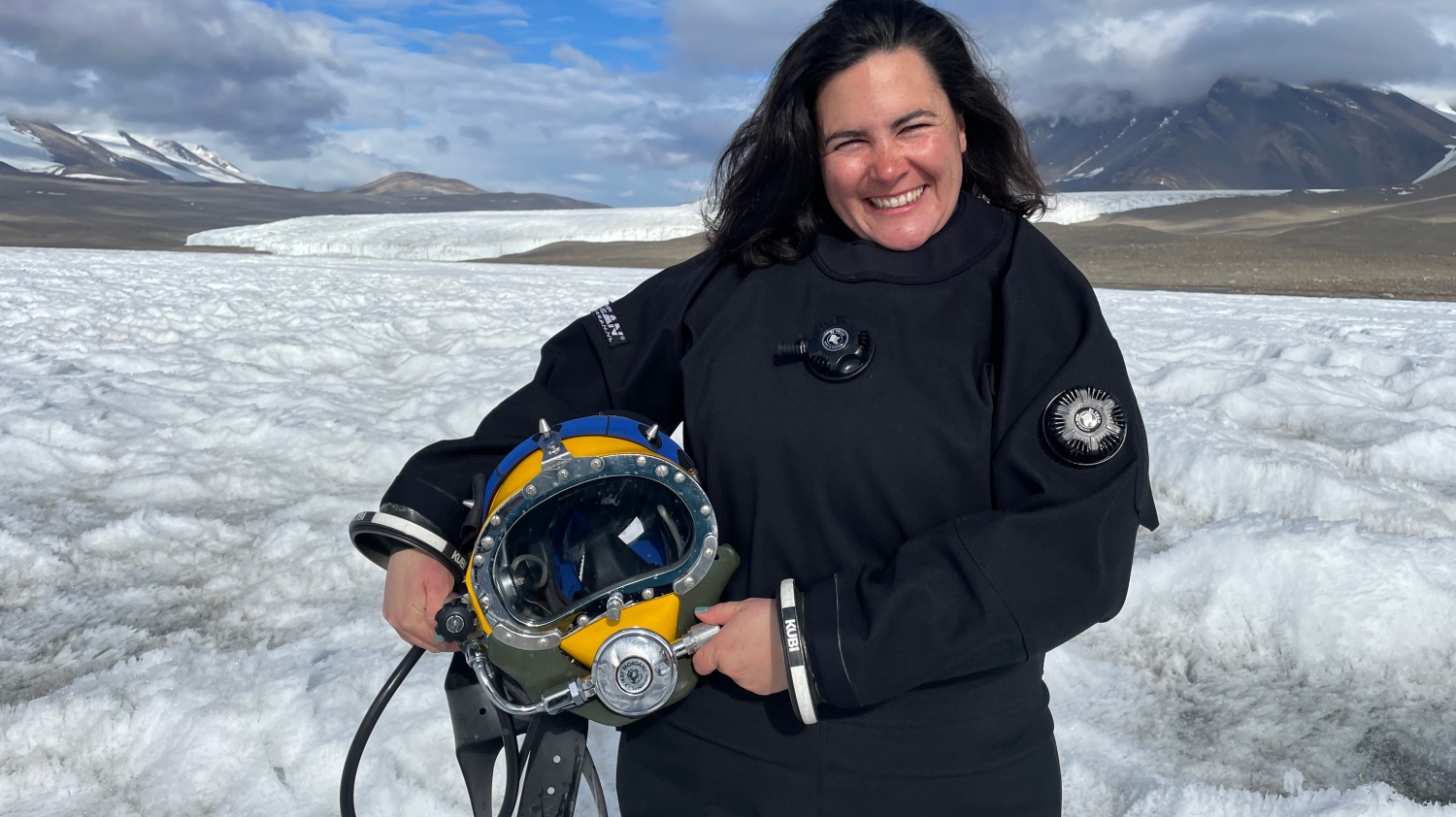
In her element

Biogeochemist Elisa Merz sits in a US military cargo plane. She's flying from Christchurch, New Zealand to the shores of Antarctica. Five other researchers from her team are also on board. "You feel a little bit like James Bond in these large airplanes that open in the back. You sit there for eight hours – among the cargo and belted onto a rope somehow. The toilet is a bucket behind a curtain", Merz explains. "There is no food, nothing to drink, and there are only very tiny windows that you can't really see out... and it is unbelievably loud." This is how her adventure begins. Pilots have to do a sight landing, which means that, if there is poor visibility, they do turn around on short notice. According to Merz, you never know exactly, when you will arrive in Antarctica – or when you can leave again.
As a postdoc at the University of Konstanz, Merz studies diatoms – water-dwelling, single-cell organisms that are key producers of oxygen. She is especially interested in learning how they survive long periods of darkness where photosynthesis is not possible. Simply explained, diatoms can store nitrogen compounds, such as NO3, in high concentrations. As a result, they can continue to respire independent of oxygen. The microbiologist explains: "When oxygen is no longer available, the diatoms use nitrate and switch from aerobic respiration to anaerobic respiration. Through their ability to store nitrate intracellularly, diatoms are able to thrive in anoxic sediments."
On this trip to the Antarctic, Merz is working as a researcher and scientific diver in a large project led by geomicrobiologist Dawn Summer from the University of California Davis (USA). At the same time, she can collect samples for her own research. Elisa Merz completed her training to become a scientific diver when she was still studying the biosciences at the University of Rostock. And, after two previous stays in Antarctica, she is excited to go there again.
A stopover at McMurdo
The US' McMurdo Station is the largest research station in Antarctica. Researchers meet at its location on the Hut Point Peninsula before heading into the field. The station is like a small town consisting of several buildings – dormitories to sleep in, a large mess hall for meals, labs, two bars and a coffee house. There is also a hospital, a fire house and a church. And, of course, there are large sports facilities with fitness equipment, a climbing wall and courses in volleyball or yoga. Considering the McMurdo Station's remote location, its range of facilities is truly impressive. Some researchers even spend the winter there.
Mealtimes help create a daily routine – with breakfast available until 7:00, lunch at 12:00 and dinner at 17:30. The arriving flights bring in fresh foods. The six-person team also spends time working in the labs and gets a week of training in preparation for their field research. They learn answers to questions like: Which dangers will we encounter in Antarctica? How do we use radios and make the most of "survival caches" stashed with a camp stove and food with a long shelf life? How do we recognize and treat frostbite? They also get "bystander intervention training" to learn what to do if a team member is on the receiving end of discrimination or sexual assault. This, too, is an important part of their training, because, while in the field, team members are very dependent on each other.
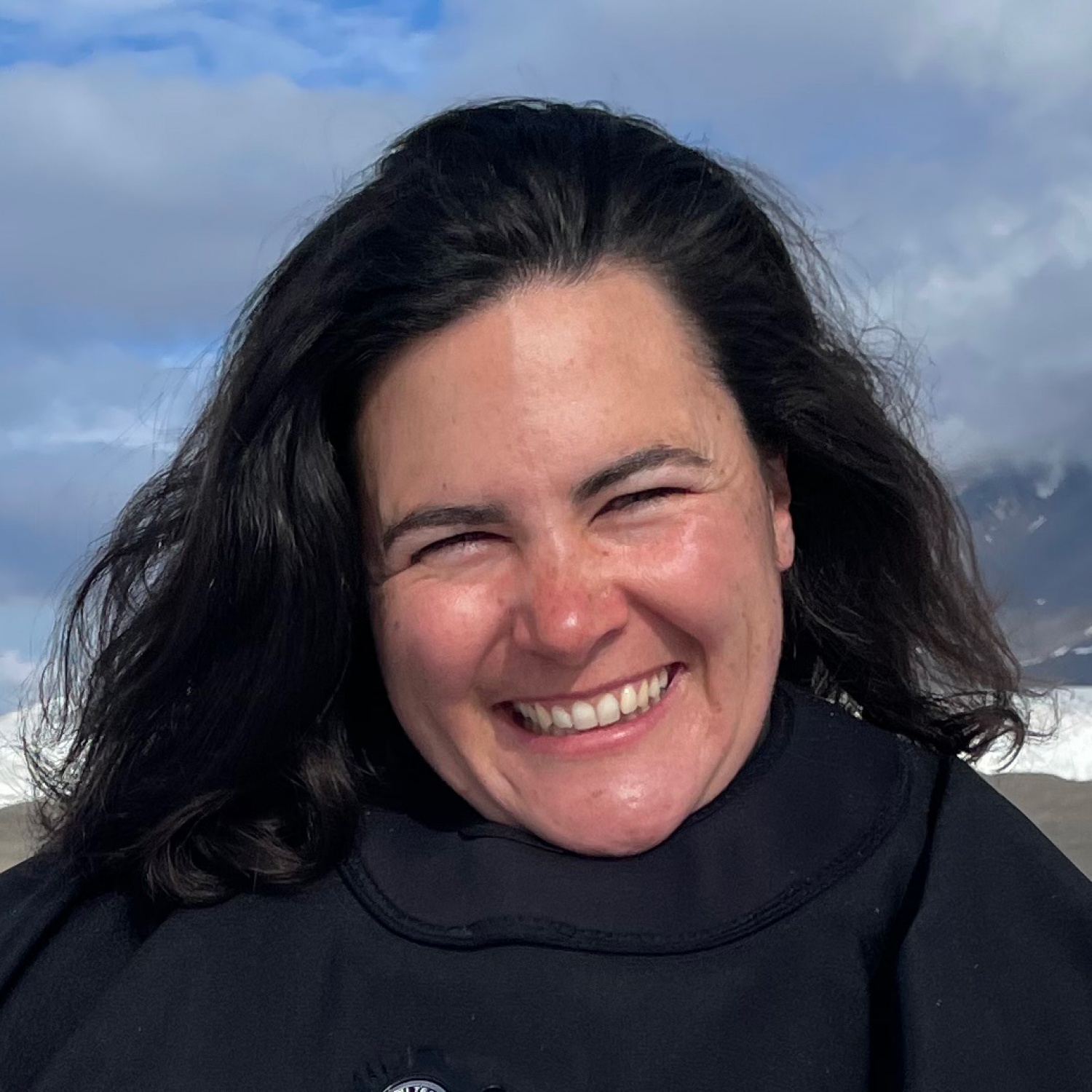
"I like the station because there is so much going on there. You never get bored", the researcher says. "On the other hand, you never have a quiet moment to yourself. If you want to relax and spend a little time alone, you have to go for a walk – which means you also take along a radio and follow a fixed route."
Elisa Merz
Outpost at a very special lake
Afterwards, the six researchers flew by helicopter to Lake Fryxell in the McMurdo Dry Valley on the Antarctic mainland. Since the area is extremely dry, the ground is covered with grey gravel instead of snow. The lake has a perennial ice cover with four to five metres of ice, and it has some special biological features.
Its water only contains oxygen at depths of up to about ten metres – but not any deeper. Such anoxic conditions are usually only found in places like the deep ocean or in very deep parts of inland lakes, such as Lake Constance, at depths of 50, 70 or 100 metres, which is deeper than divers usually descend. Ten metres, by contrast, is a very manageable depth for divers. "Lake Fryxell is also special because it does not contain any macrozoobenthic organisms – no fish and no large algae – but a whole lot of microorganisms", Elisa Merz explains. "The total ice cover means the lake is not exposed to wind and has no currents – thus it does not mix, either. As a result, we can see microbial mats at the bottom of the lake especially well. These are colonies of microorganisms that appear layered, like lasagne. These layers are completely undisturbed by worms and devoid of mussels."
The Lake Fryxell camp is a totally different situation from McMurdo Station. There is only one heated hut that includes the kitchen and an office space/common room. There are also four small lab buildings, and the researchers sleep in tents. Otherwise, there are just two bathrooms where liquid and solid excrement must be separated so they can be transported away by helicopter. This is also why showers are not an option – for six straight weeks, in this case. The ecosystem must remain intact.


 Shortly before flying to Lake Fryxell. From left to right: Marisol Juarez Rivera (University of New Mexico, UNM), Tyler Mackey (UNM), Elisa Merz, Abbey Dias (UC Davis).
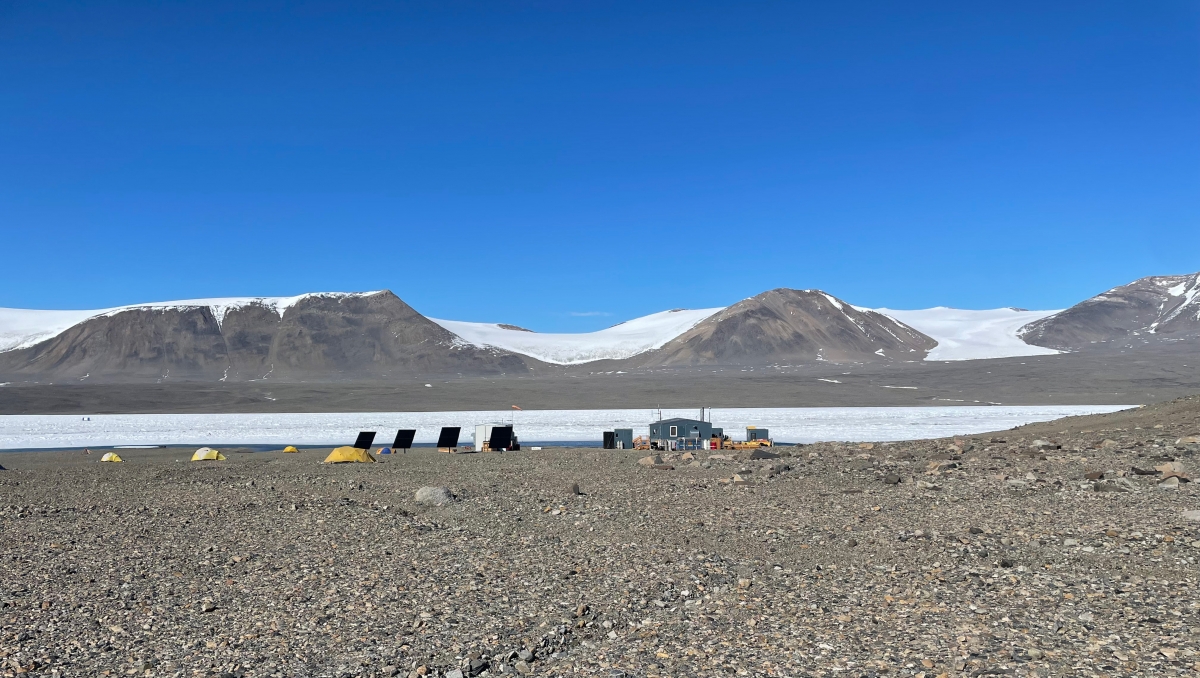 The field camp at Lake Fryxell.
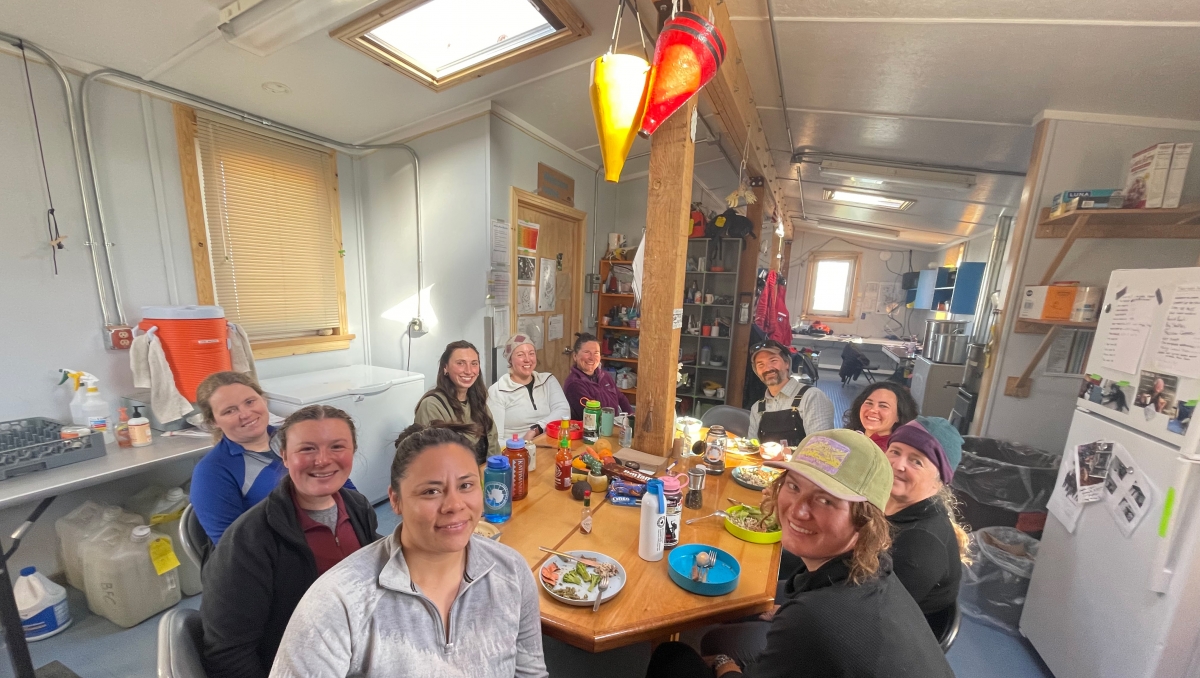 Dinner in the heated hut at Lake Fryxell.
 Preparing for the dive.
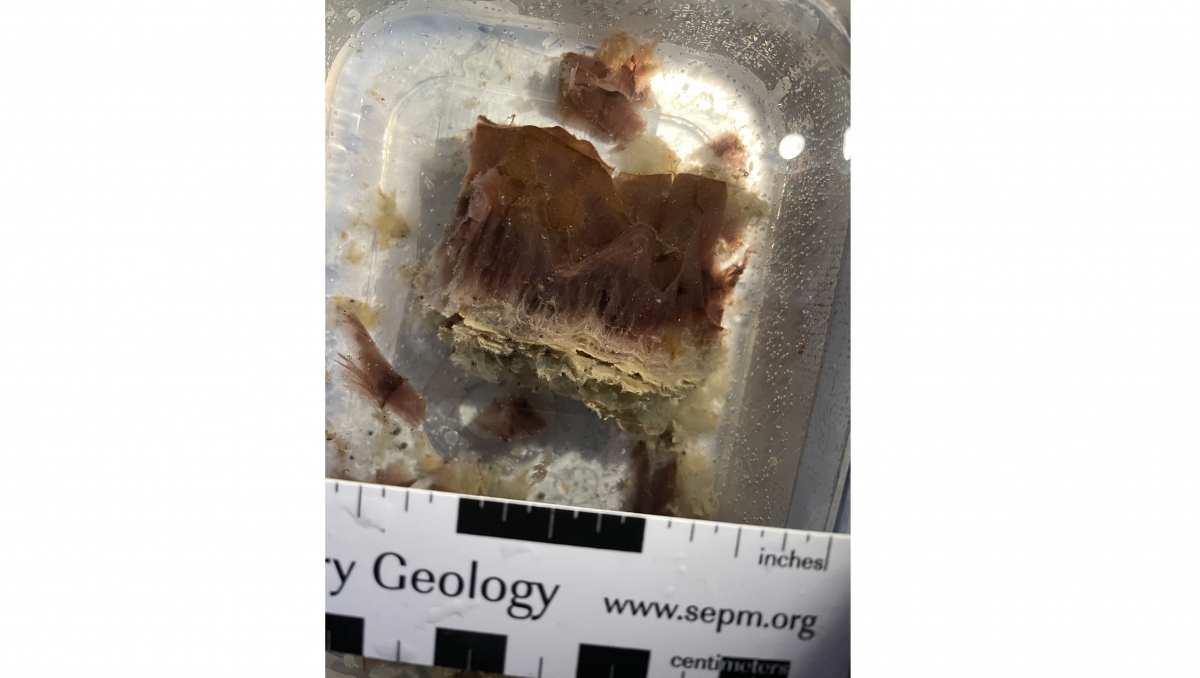 Microbial mats from Lake Fryxell.
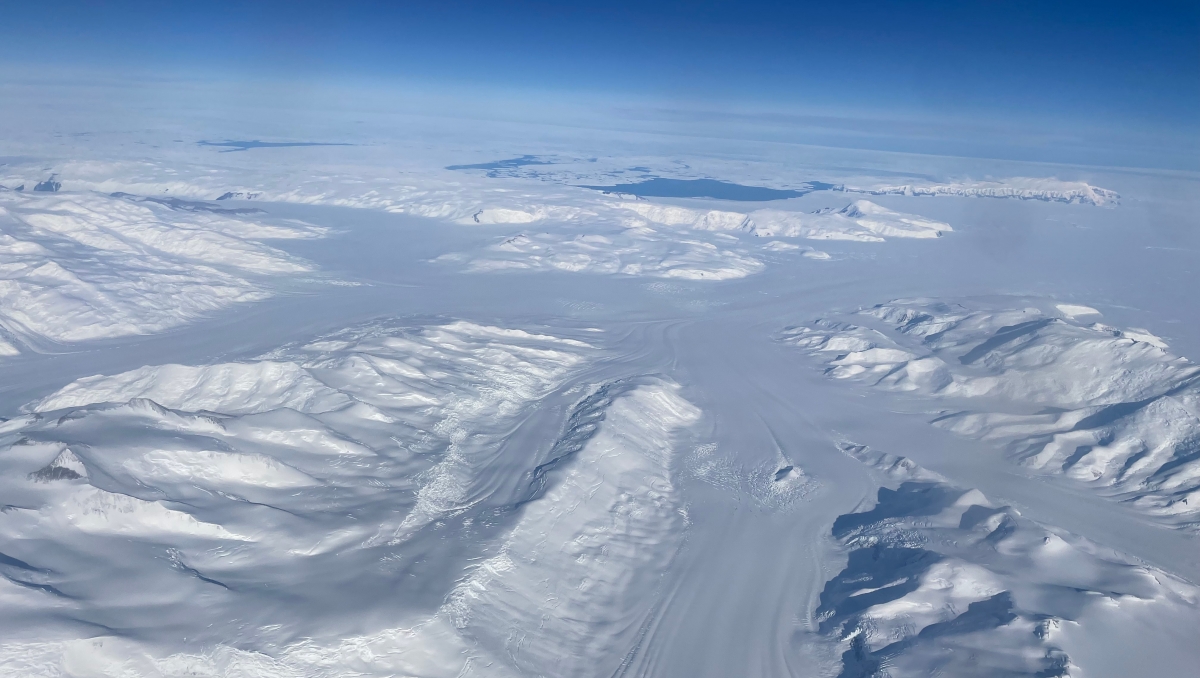 White continent.
Dressing for the conditions is top priority, which is why the five women and one man in the team decked themselves out in extreme weather clothing while they were still in New Zealand. At the camp, the climate is extremely dry, and the constant wind makes the temperatures feel even colder. Each person sleeps in their own tent on multiple layers of foam mats inside a sleeping bag with a fleece inlet. Merz explains: "The first few nights, I slept in a hat and gloves because it was really cold. We also used hot water bottles in our sleeping bags."
The research team is also responsible for managing the hut, in accordance with their daily routine. After waking up, the researchers head to the hut for breakfast and their morning meeting. They talk about the weather as well as how each team member is feeling. Afterwards, they put on their gear, head out to the field camp – that is the dive hole next to a tent, called polarhaven – and get ready to go diving. Each dive takes at least three team members to complete (diver, safety diver and dive tender); the others head back to the field station and analyze their samples in the lab. Afterwards, they refill the air tanks for the next dive. The team then spends the evenings cooking, eating, cleaning up – and getting fresh water. This entails gathering and melting ice from the glacier. After that, everyone usually goes to bed.
Diving when it is minus 20 degrees outside
"That seems incredibly cold, but the water we dive in is actually four degrees – a little bit warmer." The hardest job, according to Merz, is being in charge of holding the diving umbilical (the line supplying divers from the surface). This person feeds out or pulls in the line as necessary and keeps direct contact with the diver – all while standing in front of the tent and being directly exposed to the wind and cold. "Although we do take turns, 45 minutes of standing outside is really the absolute limit", Merz says and adds, "This is why we put little hand and toe warmers in our gloves and shoes." The third person involved is the safety diver who waits in the tent wearing their diving gear in case the scientific diver experiences any problems. Since the diving boots do not have thick insulation, this person, too, gets cold, but at least they have the shelter of a tent and a propane stove warming them.
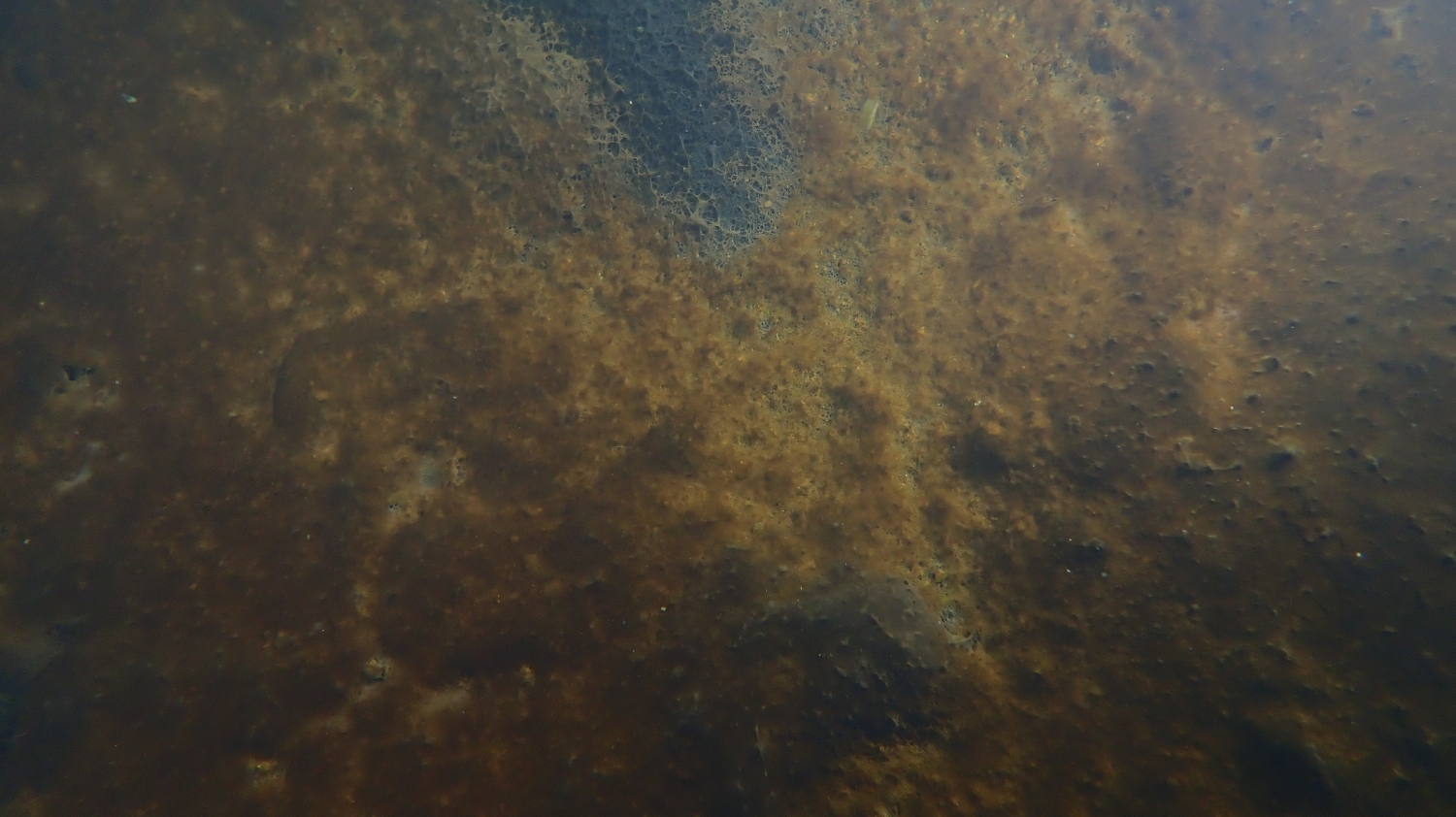
"When I'm underwater, it's like being in a dream – it’s unbelievable for me, a microbiologist, to be in an ecosystem that consists only of microorganisms. I mainly completed dives in the area we called 'Golden Meadows', since there are so many brown-gold coloured diatoms covering the lakebed there. Seeing all this right in front of you is what makes scientific diving so fantastic. Sure, you could look at all of this on a screen or in a video, but you would miss out on experiencing it for yourself."
© AbbeyDiasGolden Meadows, The gold-copper shimmering underwater "meadows".
On her dives, Merz collects sediment cores by inserting a plexiglass tube into the sediment and taking the content back to the lab. She also positions devices to take measurements and photo documentation above microbial mats in addition to collecting biomass samples by taking samples from several layers and putting them in plastic containers before bringing them back to the surface. The team analyzes some of the samples in the labs on site and evaluates the corresponding data, while other samples are later shipped to the United States for analysis.
In addition to the difficult weather conditions, living in remote Antarctica also poses challenges on an interpersonal level. Elisa Merz says it is "incredibly hard work" to be in such close quarters with such a small group of people: "You do everything together. You eat, cook and work together – you are never alone. Even on Sundays, when we had a little time off, we either went on a walk together or sat on the couch. It is really hard to get time to yourself." During six weeks in the field, sooner or later everyone has a bad day. This is why it is important to communicate this clearly, so no one takes it personally, the scientist advises.
Her conclusion? Merz says: "Either you hate field research in Antarctica, or you love it – there is no middle ground." She is simply one of those people who love it.
© AbbeyDiasElisa Merz has a doctorate in biogeochemistry and works as a postdoc in the research team led by Peter Kroth (Plant Ecophysiology) at the University of Konstanz. As a scientific diver, she has visited different stations in Antarctica: from October to December 2016 (King George Island, Base Carlini/ Argentina, Dallmann Lab/ Germany/ AWI), November 2024 to January 2025 and October to December 2025 (McMurdo/Lake Fryxell camp).