
MORE celebration: Dies academicus for the university's 60th anniversary
"The great thing about our university is: At 60, we are old enough to know who we are and young enough to keep reinventing ourselves."
Rector Katharina Holzinger
This is how Rector Katharina Holzinger opened this year's Dies academicus event – which was also held in honour of the 60th anniversary of the University of Konstanz. Many guests from academia, politics, business and civic society joined the university celebration in the Audimax lecture hall.
The anniversary motto in a nutshell: "60 years of MORE: Motion, Opportunities, Resilience and Engagement". "There is practically no better acronym to describe our university. MORE exemplifies our drive to stay in motion, open up opportunities, manage our responsibilities and actively shape the future. You can see this motivation in action when you look at the people who make up our university", Holzinger says.
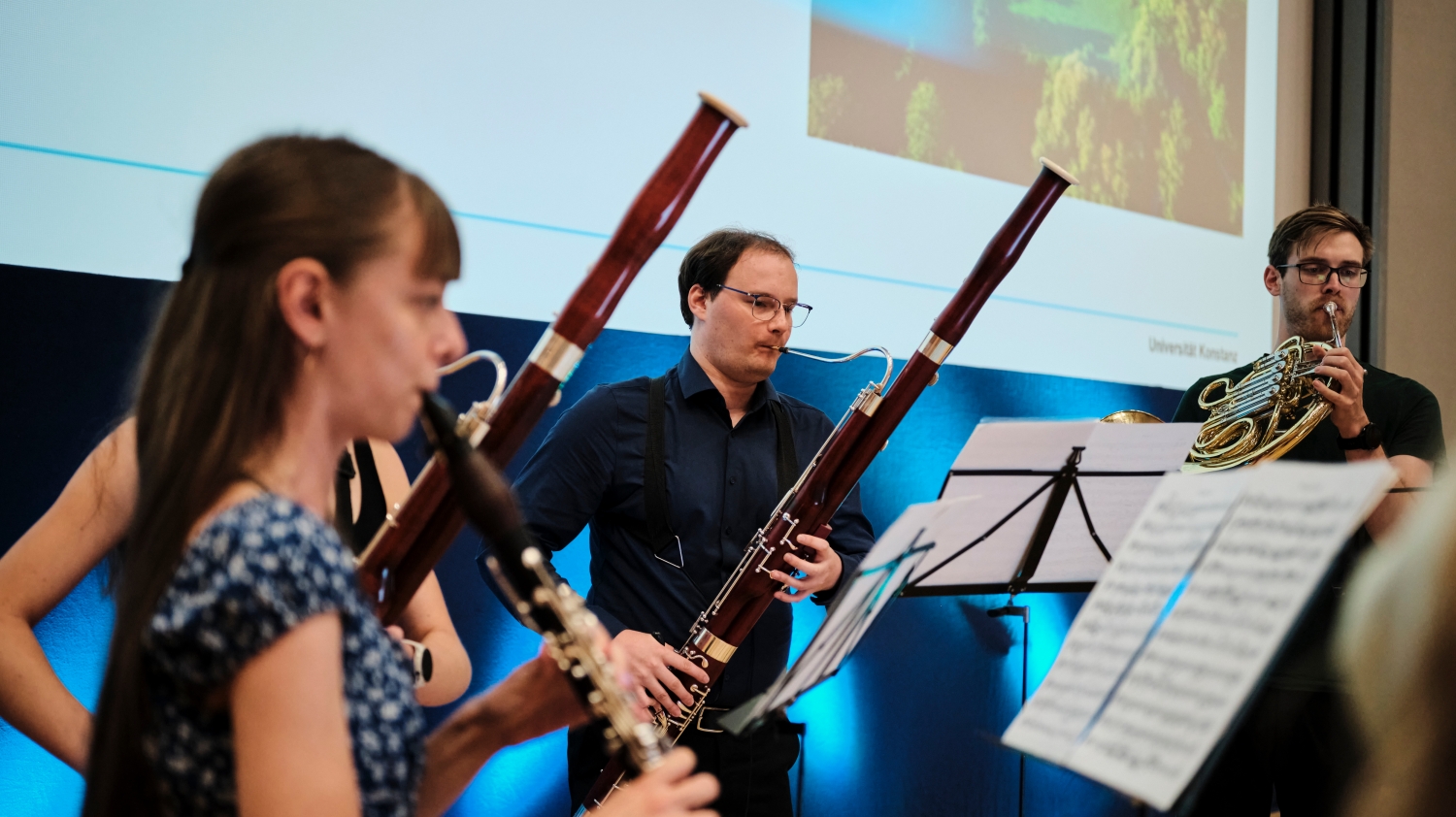
© Philipp UricherFitting music for the event was provided throughout the programme by the wind ensemble of the university orchestra, with pieces from Joseph Haydn and August Klughardt.
Universities as places of opportunity
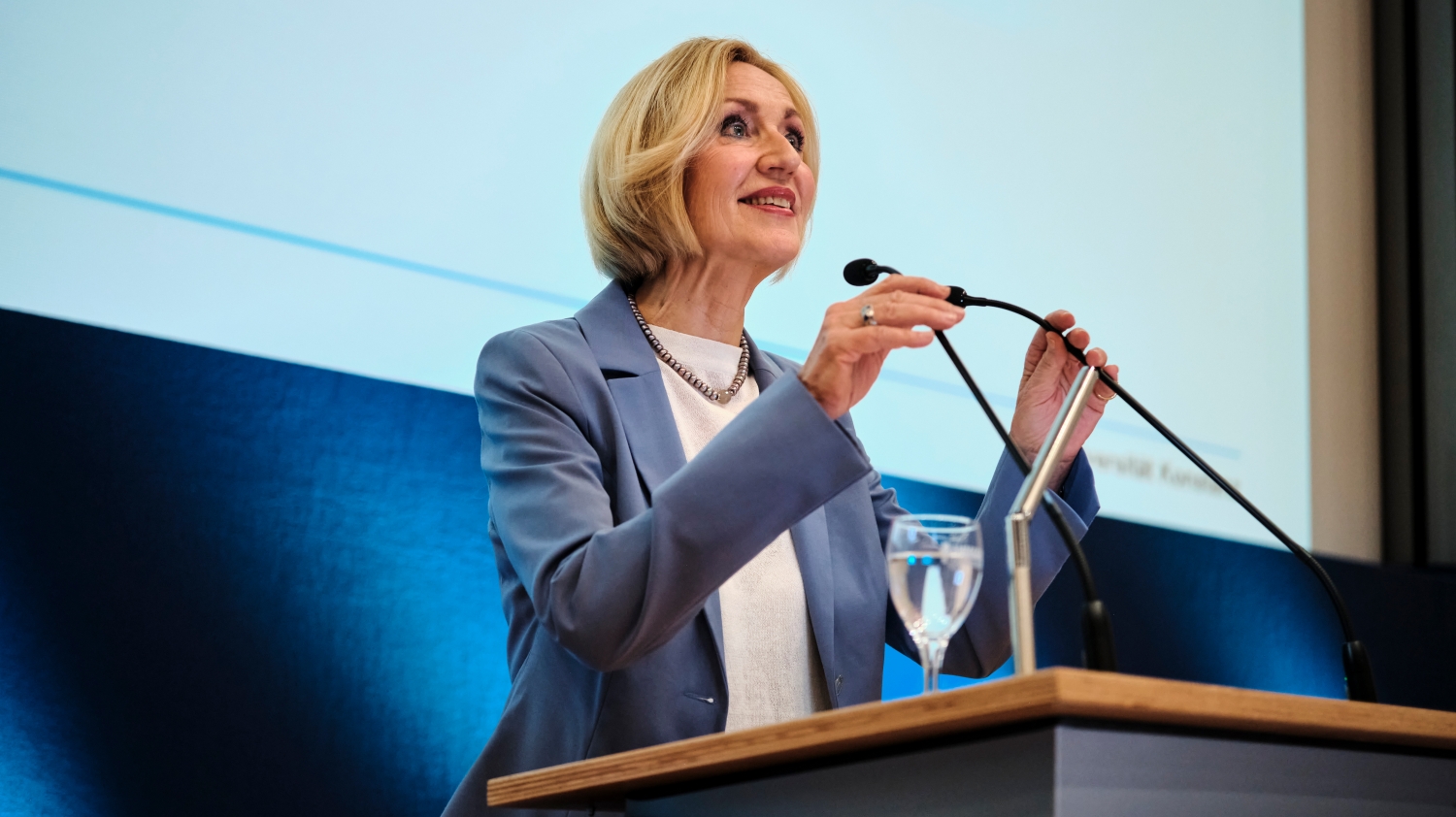
Neşe Erikli, state secretary in the Ministry of Science, Research and the Arts Baden-Württemberg reflected on the history of the University of Konstanz – and its identity as a reform university. Indeed, the University of Konstanz is a place where, at the same time, traditions are preserved and change is actively initiated and fostered. Konstanz not only provides exceptional research and teaching but also equips young people to shape their own future.
Erikli says: "We are living in a period of rapid change. Topics like climate change, artificial intelligence and automation are no longer far off – they are part of our current reality. All this profoundly impacts our working lives, our democracy and the way we live together. This is why we need young people who not only have great expertise, but who have also learned to manage uncertainty, think critically and, above all, take on responsibility. We need people who know that life's path does not always have to be straight."
"The University of Konstanz is a vibrant, many-faceted and international university that leaves its mark on the city. 60 years of the University of Konstanz – I see Konstanz as a university that takes its accomplishments seriously and yet never stops changing for the better."
Neşe Erikli, state secretary in the Ministry of Science, Research and the Arts Baden-Württemberg
© Philipp Uricher

In the Silicon Age
One of the high points of the Dies academicus was the keynote speech by journalist Petra Gerster on the topic of education, media and democracy in the age of artificial intelligence. Her speech centred on how digital change impacts democracy, public opinion and political opinion-forming. Taking the thesis of a historic turning point as her starting point – comparable to the large changes brought about by the invention of the printing press – she described the far-reaching impacts of today’s "Silicon Age" as the result of social media, artificial intelligence and the steadily growing power and politicization of major technology companies.
One key aspect of her speech was the danger posed by disinformation and the loss of a shared factual basis for democratic processes. Gerster warned that the rapid, targeted spread of disinformation via social media and its algorithmic amplification are undermining trust in democratic institutions, media and science. Classical journalistic media – that, in democracies, plays a central role as a "fourth power" in the formation of well-founded, informed opinions – can hardly keep up with this pace. Yet Gerster also emphasized the importance of classical media and research findings as a necessary counterweight to fake news.
The key to meeting the challenges that have arisen with the event of new digital technologies, Gerster says, is the creation of Europe's own AI and technology infrastructure – so it is no longer dependent on the USA and China – in addition to education and training in media literacy. She argues that democracy can only survive in the digital future if people learn to evaluate information critically, distinguish facts from disinformation and use digital technologies responsibly. Gerster modifies Steve Bannon's strategy to "flood the zone with shit", as was massively employed in Donald Trump's last presidential campaign, and instead recommends people "flood the zone with verified information, training and education."
"When people can no longer distinguish between true and false, fact and fiction, this leads to the destruction of democracy and regression to a time before the Enlightenment. To prevent this from happening, we need excellent schools, independent research, reliable media and educated people who are interested in the truth."
Petra Gerster, journalist and former moderator of the news broadcast ZDFheute.
© Philipp Uricher
Awards for particular achievements
A central part of the Dies academicus event, are the different awards that are presented to university members with outstanding achievements in the areas of teaching, research or transfer (see "Overview of this year's laureates" below). A particularly moving moment was when Jens Apitz – the university's last chancellor, who retired in December of 2025 after 26 years in the role – received the honorary citizenship of the University of Konstanz.
© Philipp UricherJens Apitz, chancellor of the University of Konstanz from 1999 to 2025, with his certificate of honorary citizenship of the university. Apitz is the fifth person to receive this special recognition. Honorary citizenships are awarded by the University of Konstanz Senate.
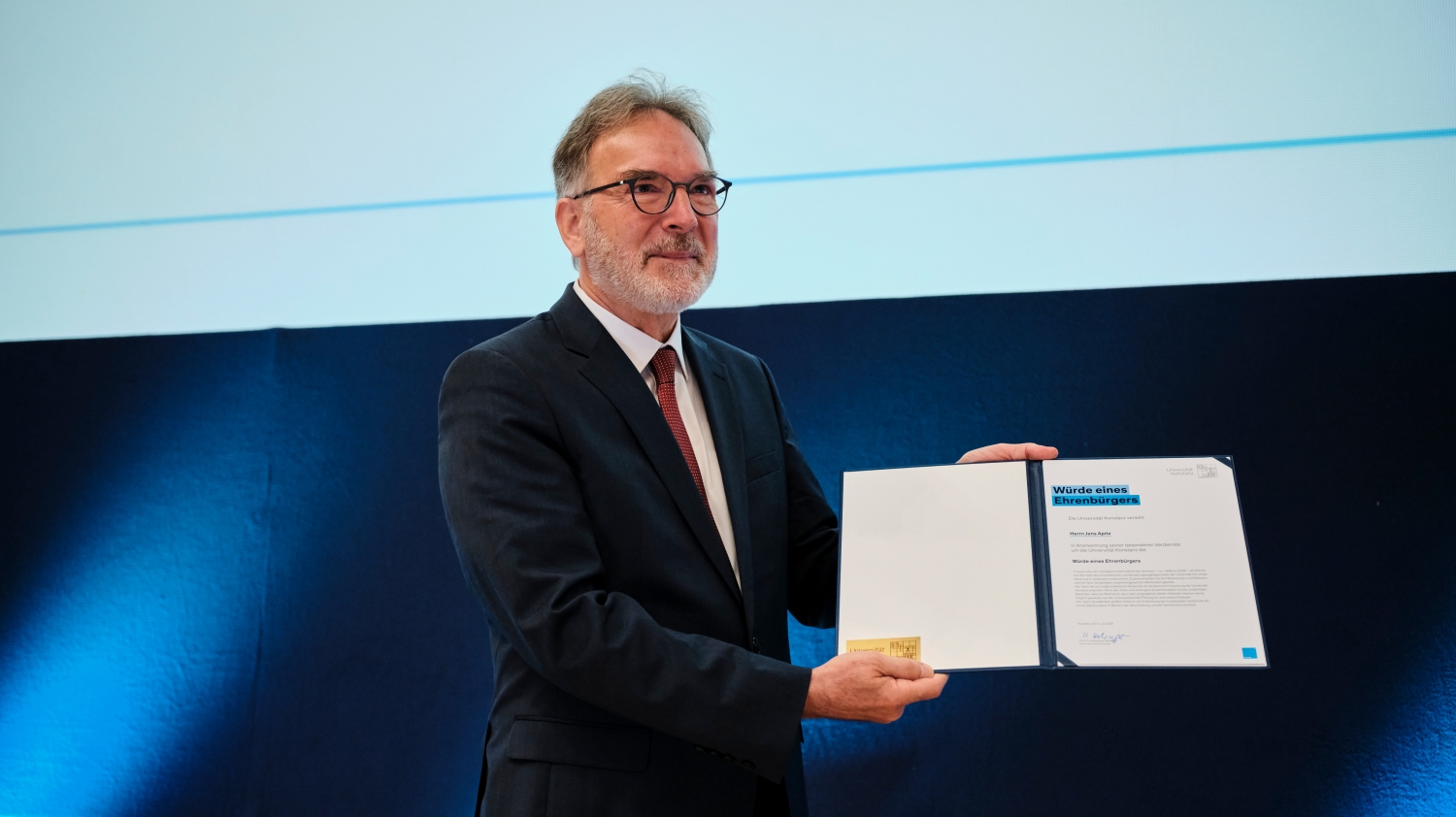
In her laudatory speech, Rector Holzinger emphasized Apitz's untiring dedication to the University of Konstanz as well as his decisive and long-lasting contributions in the areas of equal opportunity, family support and university construction. Visibly moved, Holzinger and Apitz hugged as the certificate of honorary citizenship exchanged hands. In his acceptance speech, Apitz expressed his happiness at, once again after seven months of retirement, being a "proud member" of the University of Konstanz.
Overview of this year's laureates (in chronological order)
DIETRICH H. BOESKEN Award for Clemens Gabriel Schade
Since 2008, the DIETRICH H. BOESKEN Award has been presented to the best master's graduate in one of the university’s three faculties – with the faculties alternating each year. This year, Clemens Gabriel Schade received the award for his master's thesis in Political Economy at the Department of Economics (Faculty of Politics, Law and Economics). Cai Adrian Boesken, the son of Dietrich H. Boesken, presented Schade with the award.
In his master’s thesis, Schade examined potential connections between democracy and education – in particular, the question of whether democracies and autocracies prioritize different subjects when providing education. He analzed data on the number of students studying particular subjects in the Federal Republic of Germany (FRG) and the German Democratic Republic (GDR) after World War II with data from the pre-war period. In this case, he was able to confirm his hypothesis, that autocracies (GDR) prioritize the natural sciences and technology in their educational policy whereas democracies (FRG) demonstrate a balanced relationship between the natural and social sciences.
© Philipp UricherFrom left to right: Katharina Holzinger, Clemens Gabriel Schade and Cai Adrian Boesken
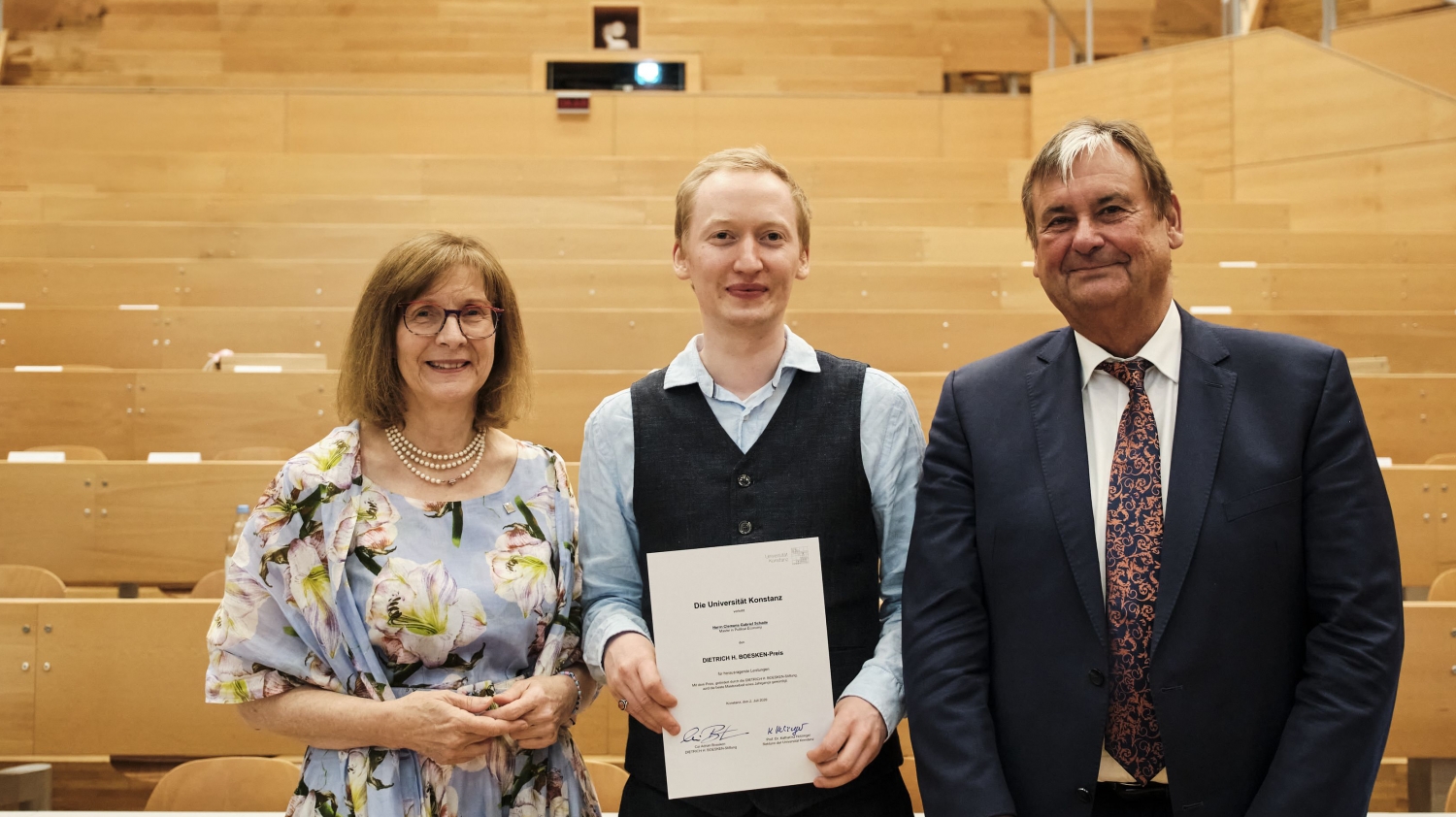
In addition to providing the award, the foundation had made a key financial contribution towards shaping and implementing this year's anniversary celebration. This special support highlights the close connection between the DIETRICH H. BOESKEN foundation and the University of Konstanz and emphasizes its lasting commitment to science and education in the region. "Today, we would like to especially thank you for your generous support", Rector Holzinger said.
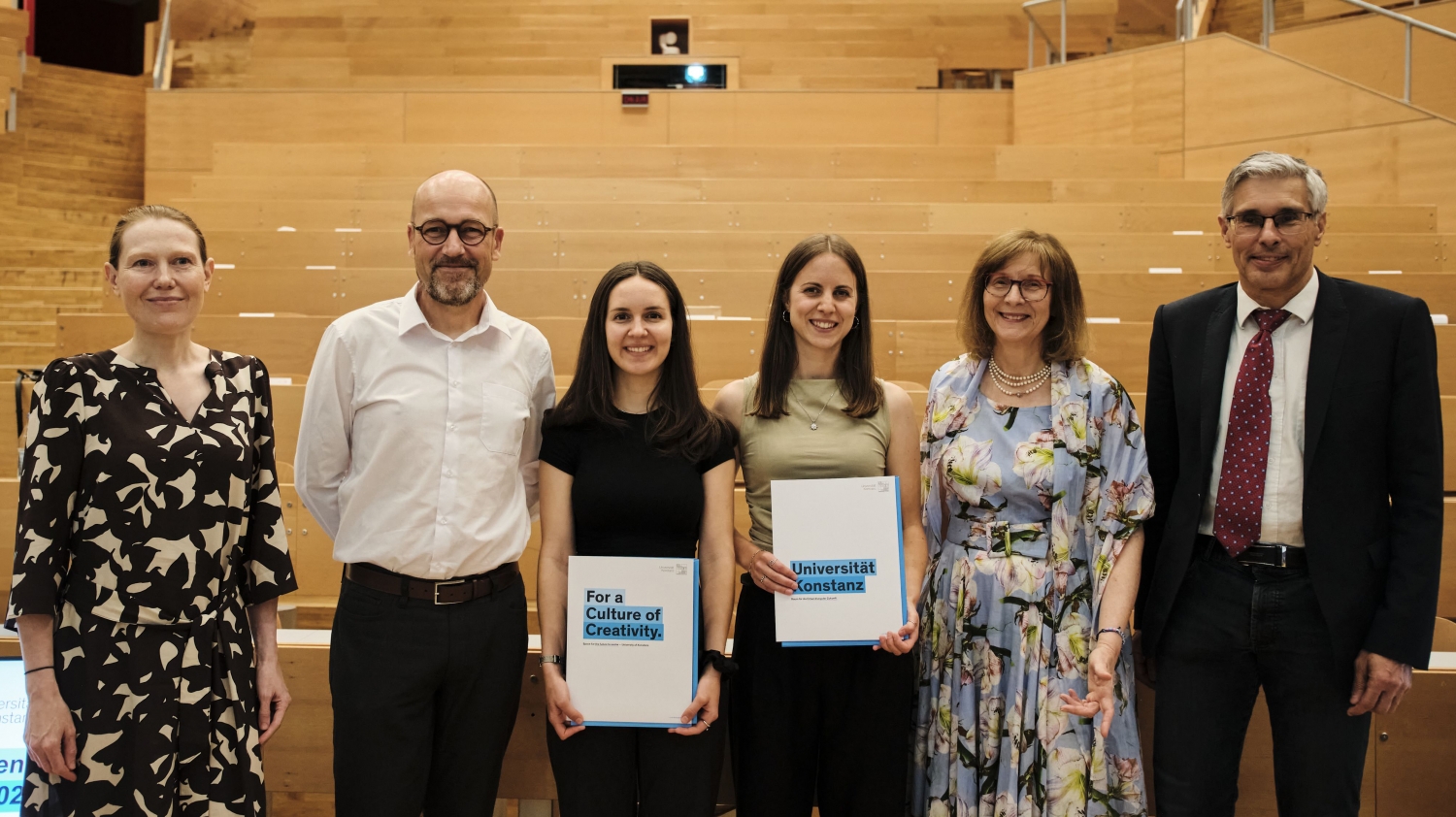
Schmieder Foundation Award for Stephanie Frankmann and Felicitas Geugis
The Schmieder Foundation Award is a research award in the specialized field of neurological rehabilitation. It recognizes outstanding bachelor's and master's theses that provide new impulses for treating people with neurological illnesses. In 2026, the Schmieder Foundation Award went to Felicitas Geugis and Stephanie Frankmann. The award was presented to the laureates by Lisa Sophia Friedrich, Chair of the Schmieder Foundation for Science and Research in Allensbach.
© Philipp UricherFrom left to right: Lisa Sophia Friedrich, Jens Pruessner, Stephanie Frankmann, Felicitas Geugis, Katharina Holzinger and Joachim Liepert
Award for Teaching Excellence (LUKS)
The Student Council Conference (FSK) presented sixteen lecturers at the University of Konstanz with the LUKS award recognizing their top course evaluations. This year's laureates are:
Manuela Ulrich (educational sciences), Veit Martin Dörken (biology), Shizhan Ren (chemistry), Eric Böhme (history), Emmanuele D’Osualdo (computer and information sciences), Matthias Schöning (literature-art-media), Paul Stephan (mathematics and statistics), Christiana Werner (philosophy), Stefan Karpitschka (physics), Ioannis Tagos (politics and public administration), Annika Tave Overlander (psychology), Kevin Christian Kahl (law), Lena Rose (sociology), Stefanie Gruber (sport science for health), Regine Eckardt (linguistics), Dominik Walter (business studies and economics)
https://youtu.be/T6Vedo1AD10
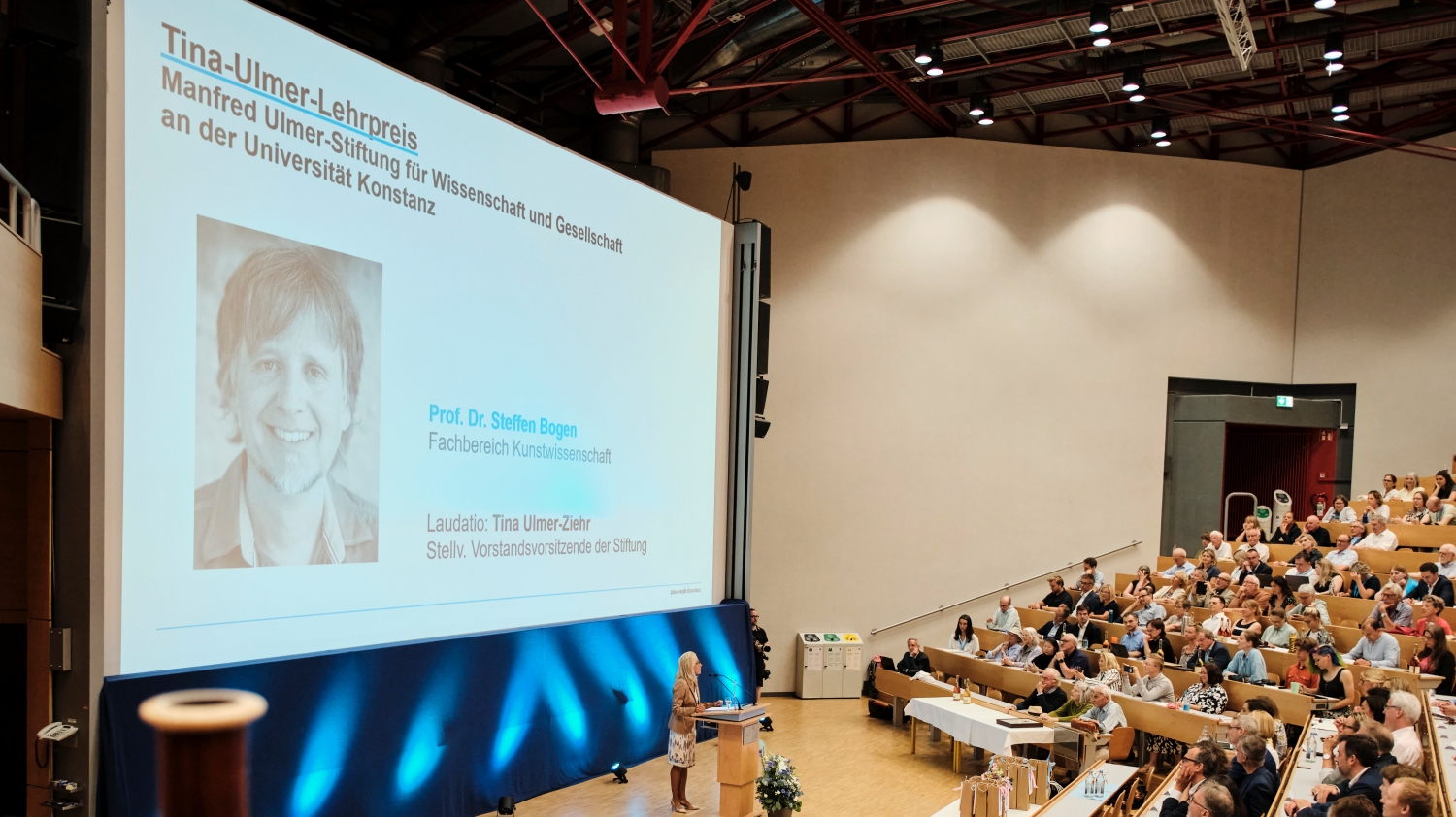
Tina-Ulmer Teaching Award for Steffen Bogen
For the third time, the foundation “Manfred Ulmer-Stiftung für Wissenschaft und Gesellschaft” provided the Tina Ulmer Teaching Award in recognition of outstanding achievements and innovative contributions to teaching at the University of Konstanz. This year, Tina Ulmer-Ziehr, vice chair of the foundation's managing board, presented the award to Steffen Bogen, a Konstanz art professor with a focus on teaching art studies and art history.
The laudatory speech highlighted the teaching project SherLOOK that Bogen developed together with students in the Literature-Art-Media programme at the University of Konstanz. SherLOOK is an interactive detective and search game for museums that has been continually built upon since 2019 and that is now an established part of the curriculum. Ulmer-Ziel said the Tina Ulmer Teaching Award not only recognizes this very successful project, but also Bogen's personality, attitude and dedication as a whole. "You take your students by the hand, motivate and put great faith in them. This creates space for their ideas and gives them the courage to try out new things. As a result, we not only gain remarkable results, but also experiences that have long-lasting effects on students – even long after they finish their studies", Ulmer-Ziehr said in her laudatory speech.
© Philipp UricherTina Ulmer-Ziehr gives the laudatory speech for Steffen Bogen
Scholarship "Manfred-Ulmer-Stipendium" for Pradeepa Basnayake Mudiyanselage
This year's "Manfred-Ulmer-Stipendium" goes to Pradeepa Basnayake Mudiyanselage from Sabaragamuwa University in Sri Lanka. Her research currently examines how data on heart rate variability and physical activity can contribute to a better understanding of health and well-being, and how lifestyle changes can help prevent chronic illnesses.
https://youtu.be/W-0UGY3U22k
The scholarship "Manfred-Ulmer-Stipendium" is embedded within the context of the Zukunftskolleg's ZUKOnnect Fellowship for early career researchers from Africa, Asia and South America. It provides the opportunity for a research stay at the University of Konstanz. During her time at the Zukunftskolleg, Mudiyanselage plans, in particular, to work with researchers from the field of sport science. Her host is Martina Kanning, a Konstanz professor of social and health sciences in the Sport Science for Health programme.
LBS research award and project funding for sustainable housing and living goes to Mona Bielig and Celina Kacperski
This year, the LBS award went to Mona Bielig and Celina Kacperski from the Centre for the Advanced Study of Collective Behaviour (CASCB). Bielig's research focuses on applying insights and methods from psychology to promoting behavioural changes, acceptance of technology and political participation. Kacperski studies the effects of environmental, technological and contextual changes on individual decisions and collective behaviour. Both of them also lead an international project on the societal effects of extreme heat.
© Philipp UricherFrom left to right: Katharina Holzinger, Mona Bielig, Celina Kacperski and Marion Mai

Researchers Bielig and Kacperski received the funding for their joint project "Heating reduction as collective action: Impact on attitudes, behavior and energy consumption in a Polish field experiment". In the quasi-experimental field study, Bielig and Kacperski used the example of student residence halls to study how technical and psychological measures can work together in the context of climate protection and the energy transition. In particular, it was possible to reduce energy usage in residence halls when technical measures were combined with a call to save energy together. The study makes it clear, that residential buildings are not just technical infrastructure, but social spaces, too, in which norms and joint action contribute decisively to climate protection.
Marion Mai, managing board member of the Stiftung Umwelt und Wohnen and LBS-Süd, held the laudatory speech.
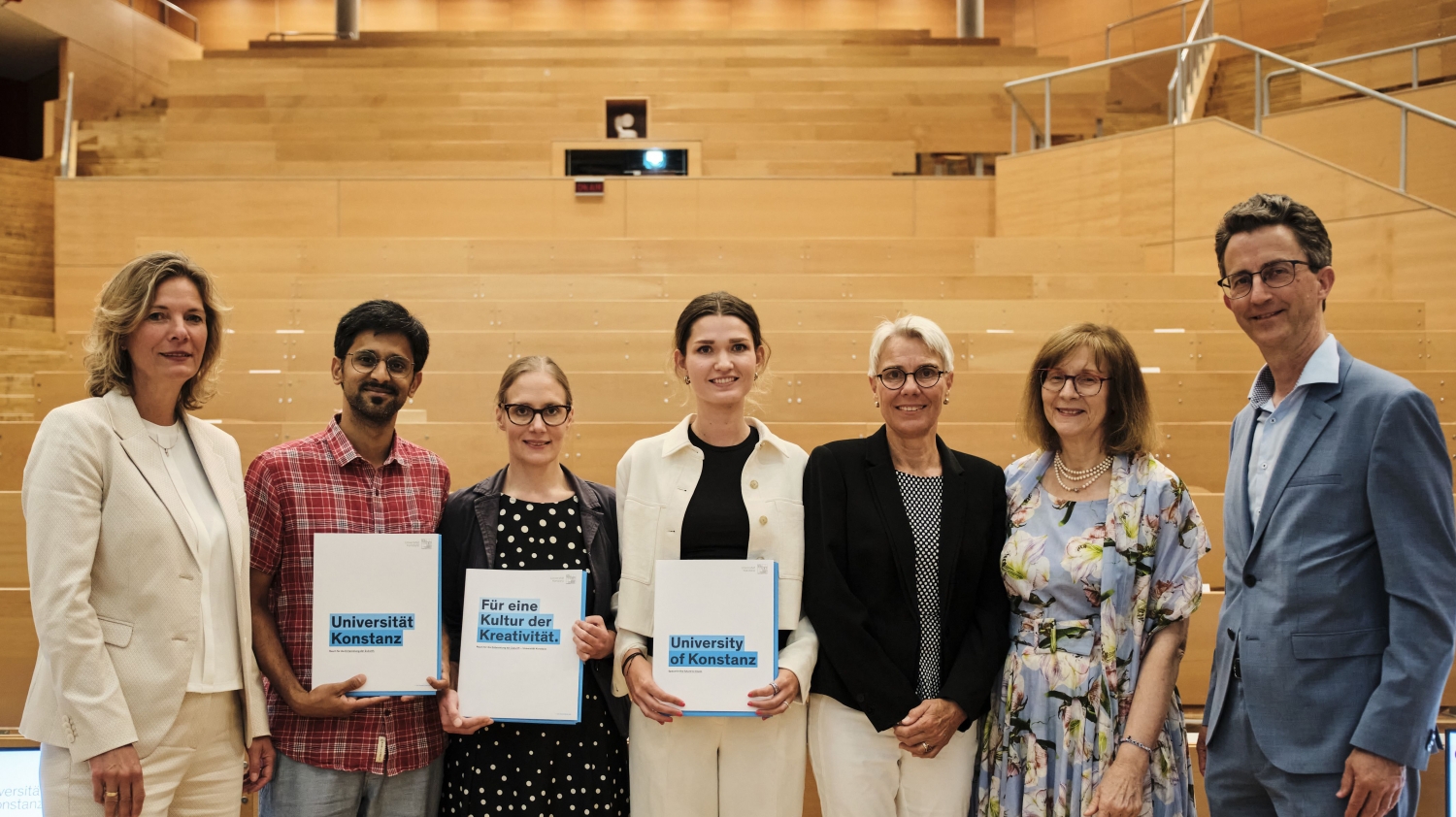
Messmer Foundation Research Awards for Thejasvi Beleyur, Claudia Roesch and Vera Schweitzer
For the seventh time, the Research Awards of the Werner and Erika Messmer Foundation were presented at the annual Dies academicus event. The 2026 laureates are Vera Schweitzer (Department of Politics and Public Administration), Thejasvi Beleyur (Centre for the Advanced Study of Collective Behaviour) and Claudia Roesch (Department of History, Sociology, Sport Science and Empirical Educational Research).
https://www.youtube.com/watch?v=vBYYmVpa-BI
© Philipp UricherFrom left to right: Petra Bialoncig, Thejasvi Beleyur, Claudia Roesch and Vera Schweitzer, Sabine Adam, Katharina Holzinger and Arnulf Heidegger
2026 University Council Award
Anne-Berenike Rothstein
Anne-Berenike Rothstein is a professor of Romance literatures and general literary studies at the University of Konstanz. By presenting her with the award, the University Council especially recognized Rothsteins leading role in organizing and conducting the lecture series focusing on life after 1945: "Lebenswege nach 1945. Generationen im Dialog". The series began on 8 May 2025 – the 80th anniversary of the end of the second World War – and used a variety of formats to discuss questions such as: How did people live with their memories of the war after it ended, and how can we respond to this past today? The event series involved students, researchers as well as renowned eyewitnesses and artists. It reached many people in Konstanz and the wider region. The University Council explained its choice by saying, "With the highest standards and with great professionalism, the series implemented the cross-generational topic in an academically rigorous manner. We thus see it as a 'best practice' for transfer activities inspired by the field of cultural inquiry".
Laudatory speech: Sabina Larcher Klee, rector of the Thurgau University of Teacher Education (PHTG) and a member of the Konstanz University Council
© Philipp UricherFrom left to right: Sabina Larcher Klee (University Council), Anne-Berenike Rothstein, Katharina Holzinger along with different members of the musical and artistic student groups at the University of Konstanz.

Musical and artistic student groups at the University of Konstanz
The second University Council Award for 2026 was awarded to six different musical and artistic student ensembles at the University of Konstanz: the university orchestra, the university choir, Wind Symphonica, the Big Band, the d'Acchord choir and the university theatre. The University Council recognized these groups' contributions to vibrant student life as well as the commitment and inspiring work on the part of their respective artistic directors. The groups make an outstanding contribution to cultural life at the university and leave an impact that is felt far beyond the campus in both the city of Konstanz and the broader region. "They are effective visible ambassadors for the university", explained University Council member Sabina Larcher Klee in her laudatory speech.
Transfer Award 2026
On the day after the Dies academicus– at the university's Open House event – this year's Transfer Award was handed out in the categories "utilization and cooperation" (presented by the University of Konstanz Society (UGK)), "transfer into teaching" (presented by the Transfer in Teaching team) and "science communication" (presented by the Staff Unit University Development, Research and Transfer). The laureates are: Gregor Schmitz (science communication), the spin-off InnoZell (utilization and cooperation) and the social scientists Sandra Walzenbach and Sebastian Koos (transfer into teaching).
Impressions from the Open House event on Friday, 3 July 2026
On the Friday after Dies academicus, the University of Konstanz invited the public to join the 60th anniversary celebration at a special Open House. For the occasion, alumni returned to the campus, families discovered the university for themselves, children conducted experiments and guests got to peek behind doors that are otherwise closed to the public. All across the campus, people had the chance to discuss, explain, test and laugh together. A wide range of people from very different backgrounds came together for the special event.
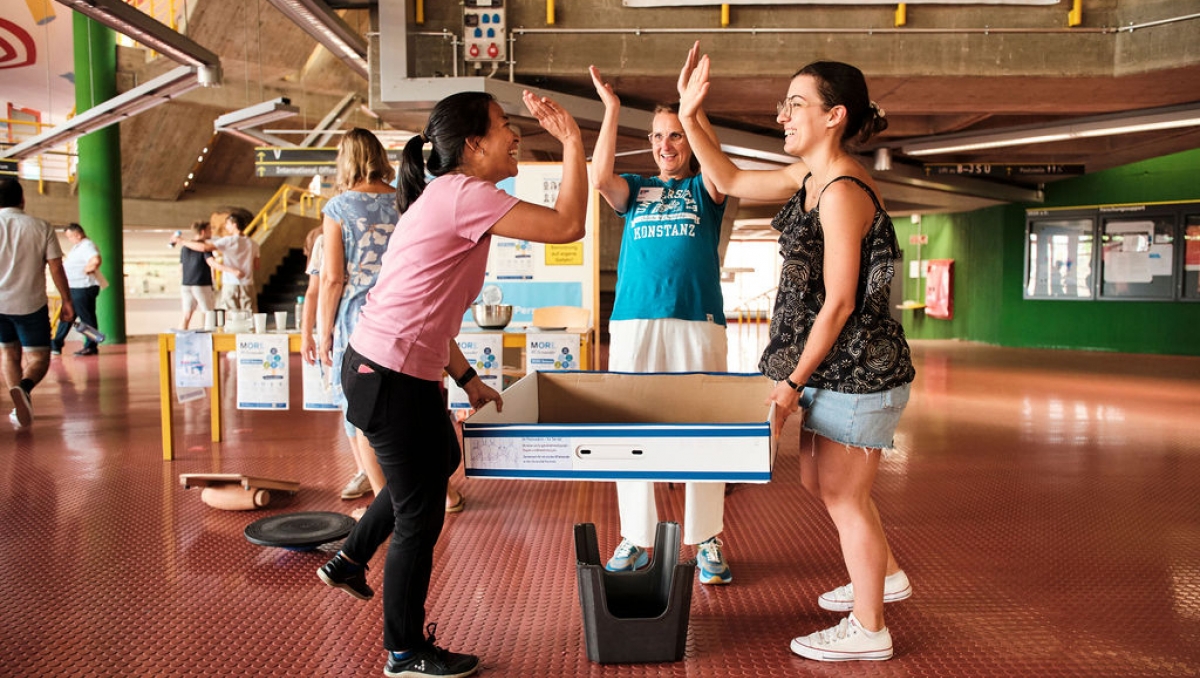

 At the Staff Council's stand, teamwork was key for the balance games offered there. The stand's motto was about balance being essential for a healthy community – at work and elsewhere.
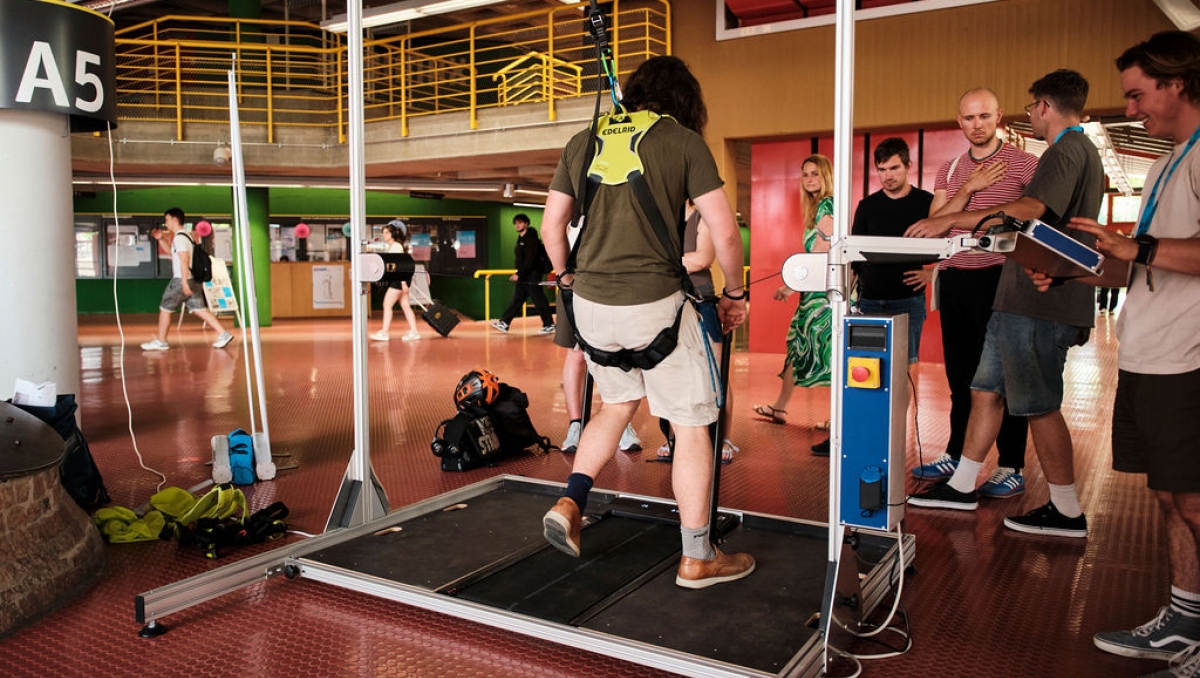 At the sport science stand, visitors were intentionally thrown off balance to raise attention for the topic of preventing falls.
 The university group "Tintenklecks" attracted visitors with cake and a quiz to their busy stand.
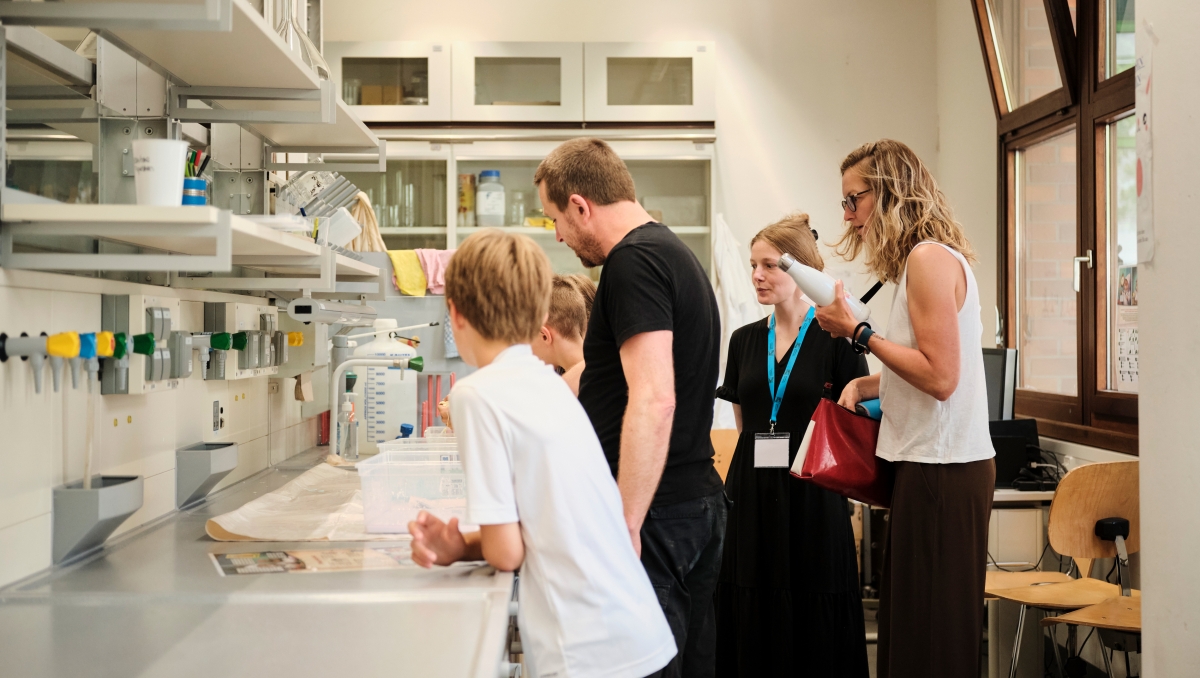 "Kaboom! and the secret of the lotus flower" was the title of the Schülerlabor's chemistry escape room challenge.
 Visitors dove into a virtual reality world at the joint stand of the Binational School of Education (BiSE), the Green Office, the Staff Unit Sustainability and the European University Alliance EUniWell.
 At the kunst.werk.stadt stand, visitors watched Sandro Fedelini's live painting performance.
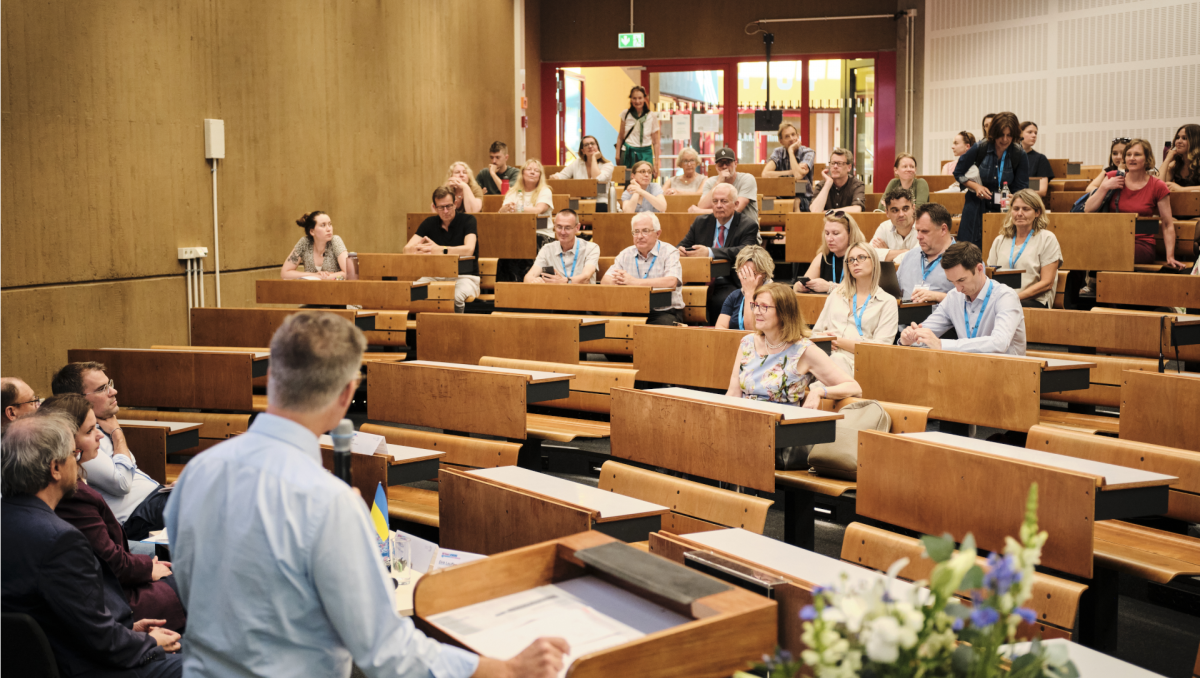 Ukraine is a "role model for resilience". This is how Vice Rector Dirk Leuffen opened the corresponding podium discussion. Experts from Ukraine and Germany explained that this is not only true for the military sector, but also for the economy. One key factor is that Ukraine is able to successfully build international confidence in its financial system.