

Analyzing dropout in online studies
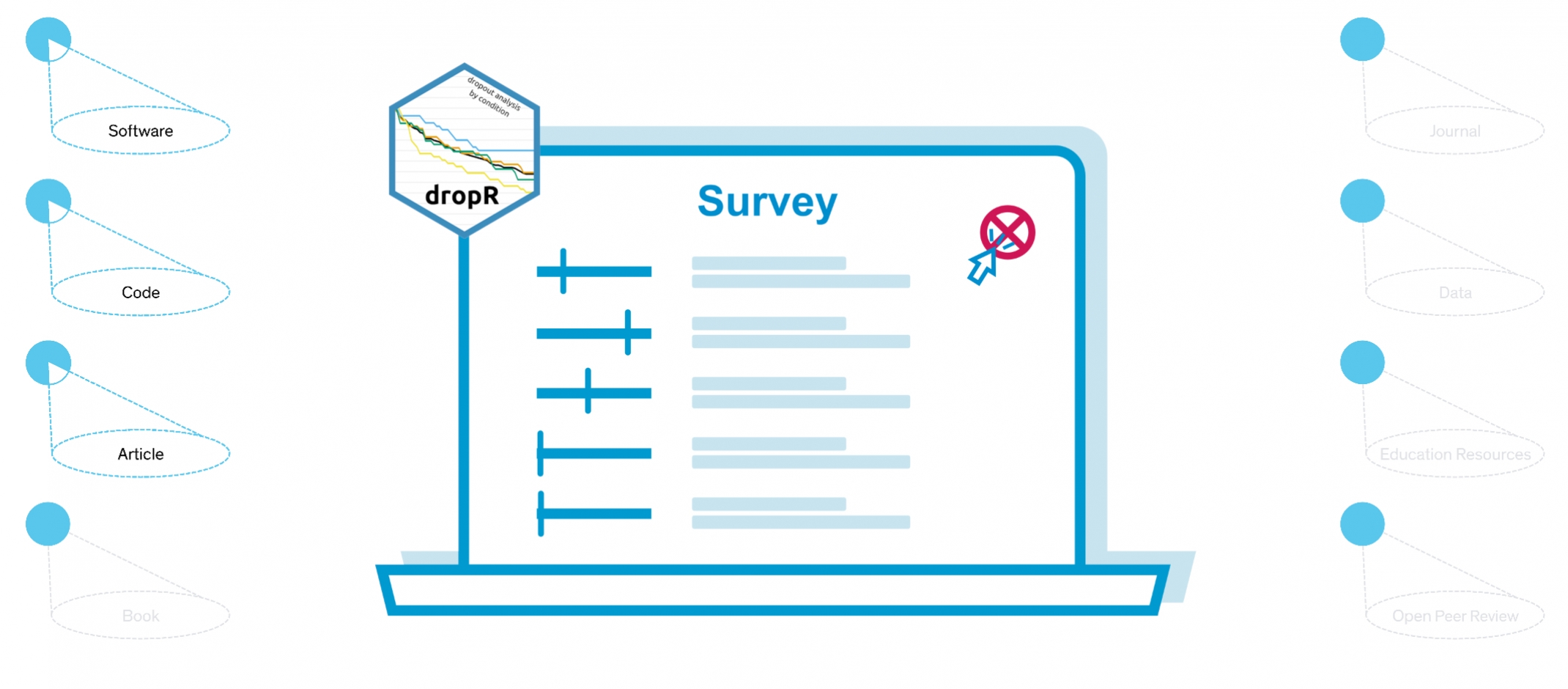
Conducting studies online for research purposes is an effective way to reach a large number of participants. However, experience shows that due to the highly voluntary nature of participation and the lack of social control, online surveys and experiments tend to have a higher share of participants who do not complete the study compared to conventional studies. But this so-called “dropout” (also called attrition or mortality) does not necessarily have to be viewed as a problem. Instead, it can provide valuable information, for example, about participants’ motivation or technical incompatibilities on their devices.
In an open-access publication, Ulf-Dietrich Reips and Annika Overlander (University of Konstanz), together with Matthias Bannert (ETH Zurich), discuss ways of dealing with dropout and introduce dropR – a specialized software tool for analyzing and visualizing dropout in internet-based research. The software is freely available and can be used both as a user-friendly web app and as an R package for users familiar with the R programming language.
The analysis tool dropR is available as a browser-based web app for free use on the R Shiny server of the iScience group (AG Reips) at the University of Konstanz or at https://dropr.eu.
The analysis tool is also available as the R package dropR (10.32614/CRAN.package.dropR) from CRAN or from the iScience group’s GitHub repository. A detailed guide on dropout analysis in R is included in the package vignettes.
The accompanying article (doi: 10.3758/s13428-025-02730-2) on the analysis tool dropR is available through our publication server KOPS or via the Springer Nature website.