From the sarcophagus to the sequencer
Sometimes another person is key for being able to do something that would otherwise be impossible – people who know the risks, but are courageous enough to make the attempt in order to fulfil a dream.
Gisala Kopp, a biologist from the University of Konstanz’s Zukunftskolleg, is familiar with this situation. Ever since she was a doctoral researcher, she had dreamed of studying isolated and unexplored populations of primates in the Sahara. Yet, without her US American colleague Nathaniel J. Dominy, she probably would never have fulfilled this dream. Their international collaboration was made possible by a ZENiT Fellowship from the University of Konstanz’s Zukunftskolleg.
About ZENiT
In 2023, the Zukunftskolleg at the University of Konstanz introduced a new group fellowship format: ZENiT (Zukunftskolleg Exchange Network: interdisciplinary Talent). The fellowship gives postdoctoral researchers at the University of Konstanz the opportunity to form their own team of researchers and prominent figures outside academia in order to work on projects that expand the boundaries of their current research. Researchers thus have the opportunity to broaden their horizons and strengthen their networks. ZENiT provides the university's postdoctoral researchers with fellowships lasting up to three years.
In her ZENiT project, Gisela Kopp worked with an international, interdisciplinary team to study the bio-cultural connections between ancient Egypt and central African regions now separated by the world's largest desert, the Sahara. Their goal is to find out whether the first primates came from Chad to Egypt via trans-Saharan trade routes. Kopp explains, "We employ genetic and geochemical methods to trace connections between different non-human primates – connections that were mainly influenced by changing climatic and environmental conditions in addition to human trade relations."
A door opener: samples from mummified baboons
The team's work focuses on baboons – animals that played an important cultural role in ancient Egypt. Presumably, they were kept as pets and worshiped as representatives of the deity Thoth. Since there were no wild baboon populations in Egypt, they were likely imported from more southerly regions. To find out where they originally came from, however, it is not enough to study the primates living there today. The team has to compare them with ancient Egypt's mummified baboons to see whether they are genetically related.
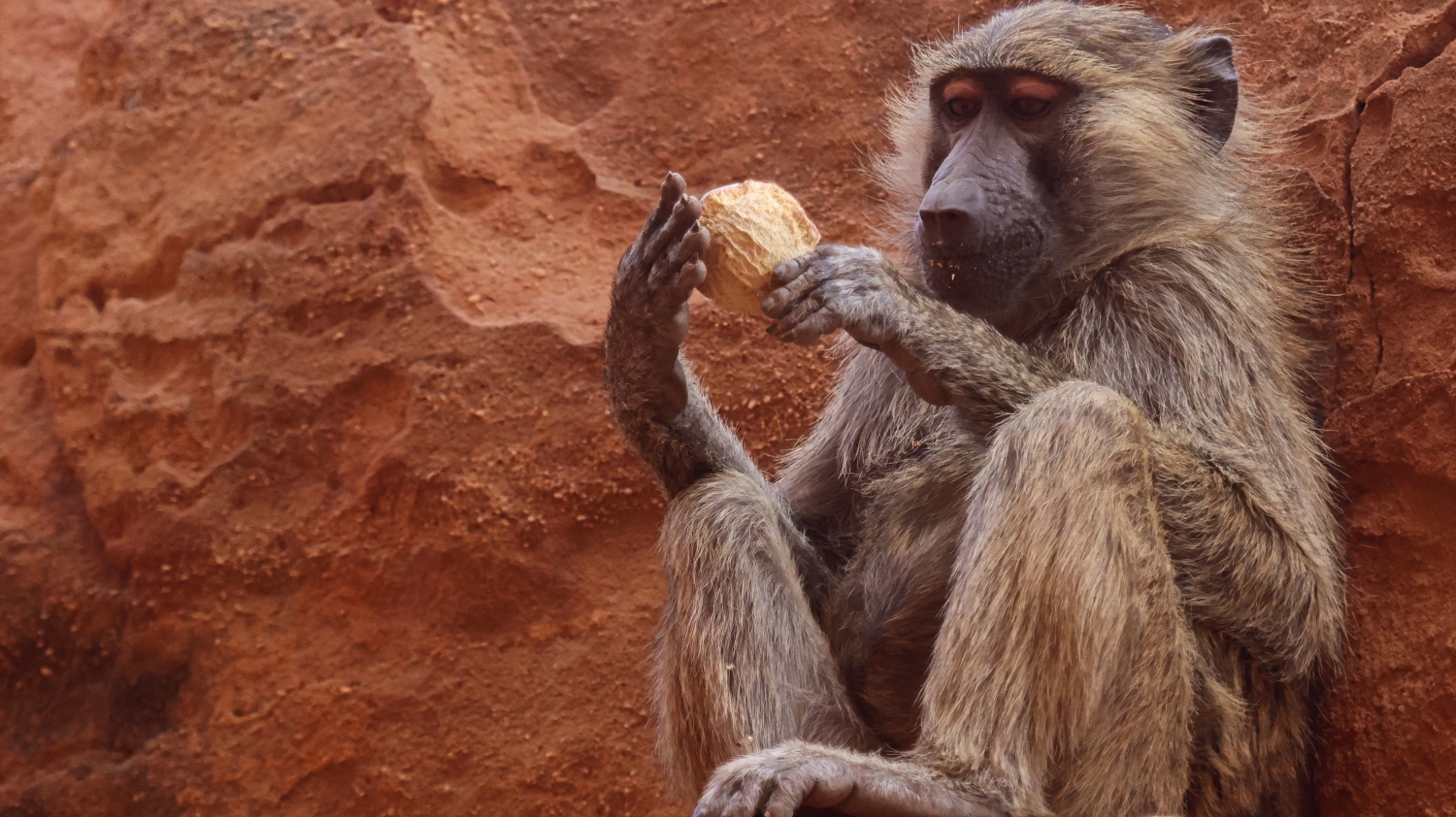
© Cat HobaiterA young olive baboon enjoys the fruit of a doum palm.
Years ago, Gisela Kopp had tried to get access to samples from mummified baboons for genetic analysis, yet this proved more difficult than expected. Nathaniel J. Dominy from Dartmouth College (USA) was one of the few researchers to have already examined such samples. However, he had not analyzed DNA sequences, but used stable isotope analysis to identify the geographical origin of the samples. Kopp simply wrote him an email, explaining what she wanted to do. "He was very interested in discussing my question, and over the years, this developed into a close collaboration", she explains.
"By bringing together our different methodological approaches and including other scientific disciplines, we were able to combine our individual results to create a broader and more in-depth overall picture."
Dr Gisela Kopp
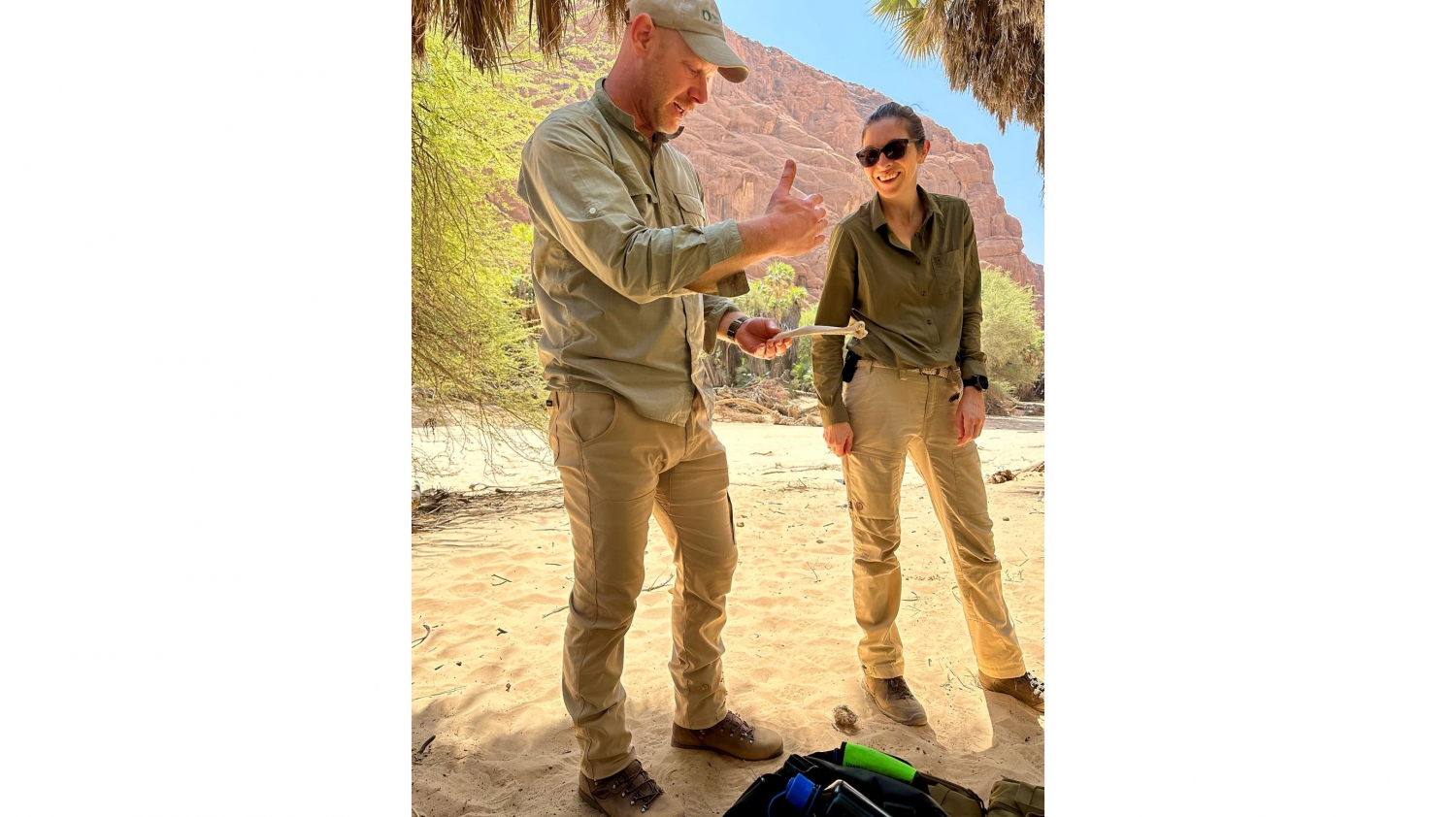
© Cat HobaiterGisela Kopp and her collaboration partner, Nathaniel Dominy from Dartmouth College, examine the humerus of a baboon.
A comparison with living populations of baboons revealed that the mummified baboons likely originated from the coastal region of Eritrea and had been shipped via an important trading centre, the ancient port of Adulis, across the Red Sea to Egypt. The researchers still did not know why the primates had played such an important cultural role in ancient Egypt that they had even been viewed as representatives of the deity Thoth. Key information for answering this question could come from examining the oldest documented baboon burials from predynastic times. These baboons belonged to a different species and were probably imported from another region further to the west, possibly in present-day Chad.
However, at this point in time, there were no genetic samples from baboons in Chad available to compare them to. The researchers had to travel there and collect their own samples in the field in order to conduct an exact comparison. The project took a decisive step forward during the research visit by Nathaniel J. Dominy at the University of Konstanz. Gisela Kopp nominated the anthropologist for a Senior Fellowship – a programme funding several-month stays for established researchers – at the Zukunftskolleg. In order to bring together experts from different fields in the humanities and natural sciences, Kopp and Dominy organized a workshop on mummified primates and were awarded funding to continue their project.
"We wanted to give the topic a broader interdisciplinary foundation and we were delighted that all the researchers we contacted were enthusiastic about taking part. The workshop laid the groundwork for our interdisciplinary ZENiT project – and the after-workshop-events in the university’s beer garden also really helped bring our collaboration partners together."
Dr Gisela Kopp
Later, Kopp was invited as a visiting professor to the Department of Anthropology at Dartmouth College, where she intensified her collaboration with Dominy. She says, "Nate is one of the most creative, fascinating and well-read researchers I know. He is even willing to try out the craziest ideas and is always encouraging me to 'just go for it.' Without this support, I probably would not have started the field project which, on many levels, was so risky." During her stay in the US, Gisela Kopp worked with Dominy to plan the field research in the Ennedi Massif of Chad.
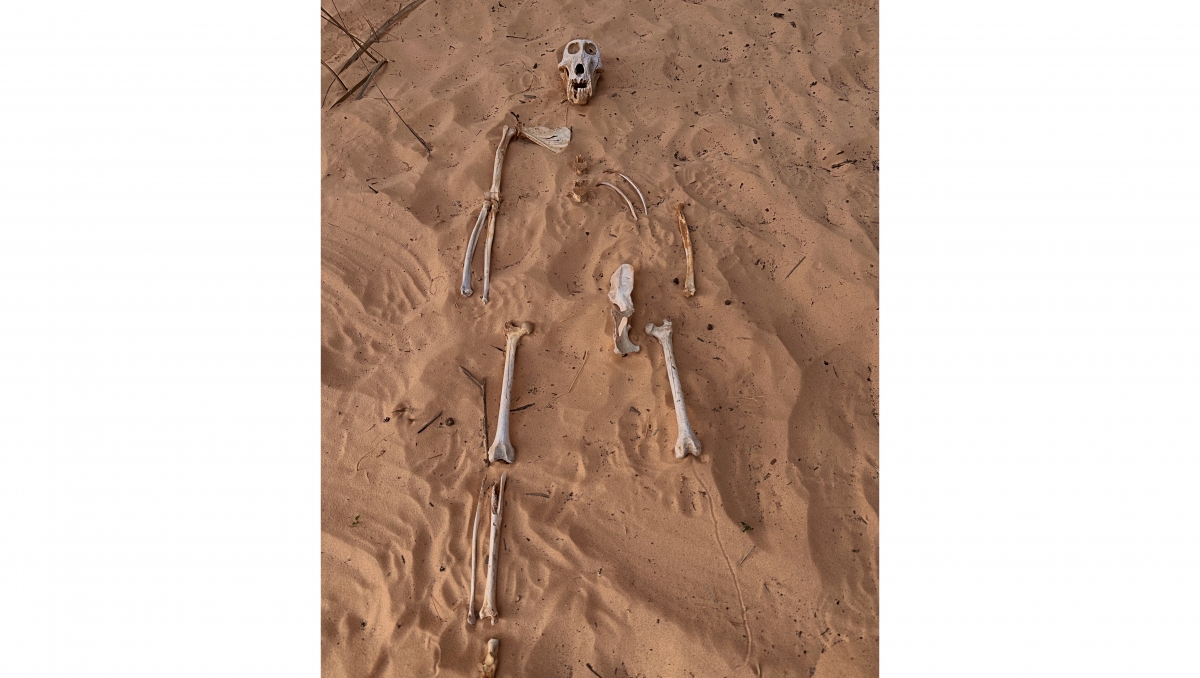

 The laborious search in the jagged cliffs of the Ennedi Massif proved successful: a partial skeleton of an adult male baboon that provided samples for stable isotope analyses.
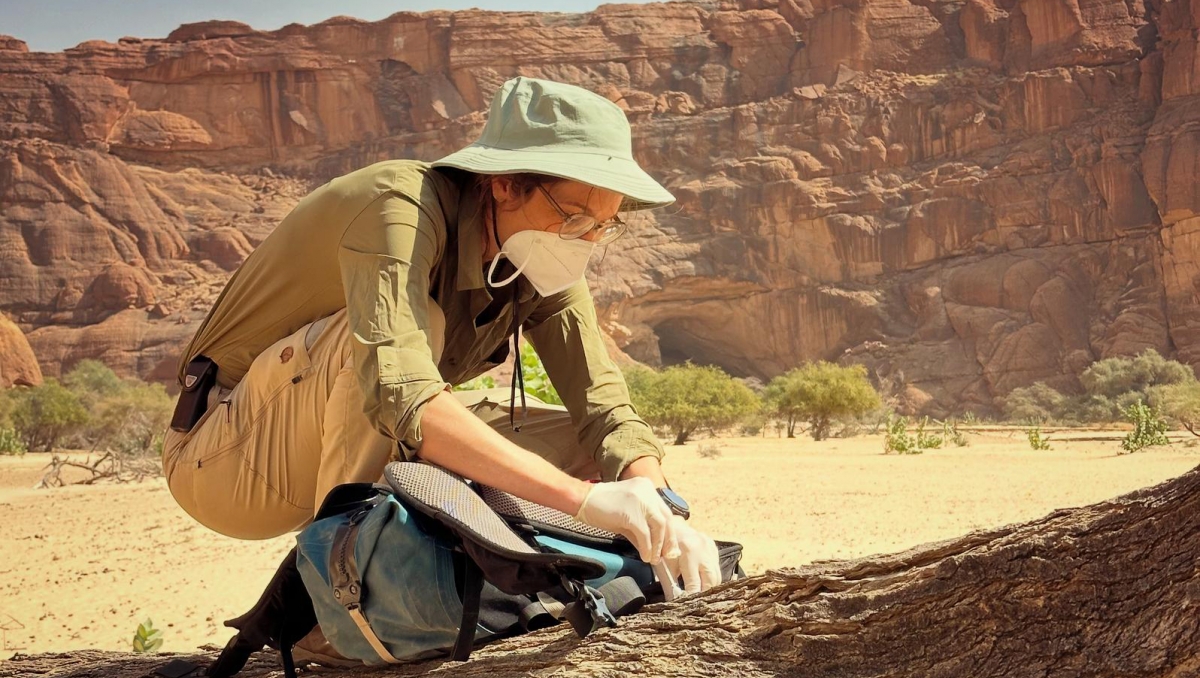 Dr Gisela Kopp is a biologist and research fellow in the Zukunftskolleg at the University of Konstanz. Her research combines concepts and techniques from evolutionary biology, anthropology, behavioural ecology and genomics.
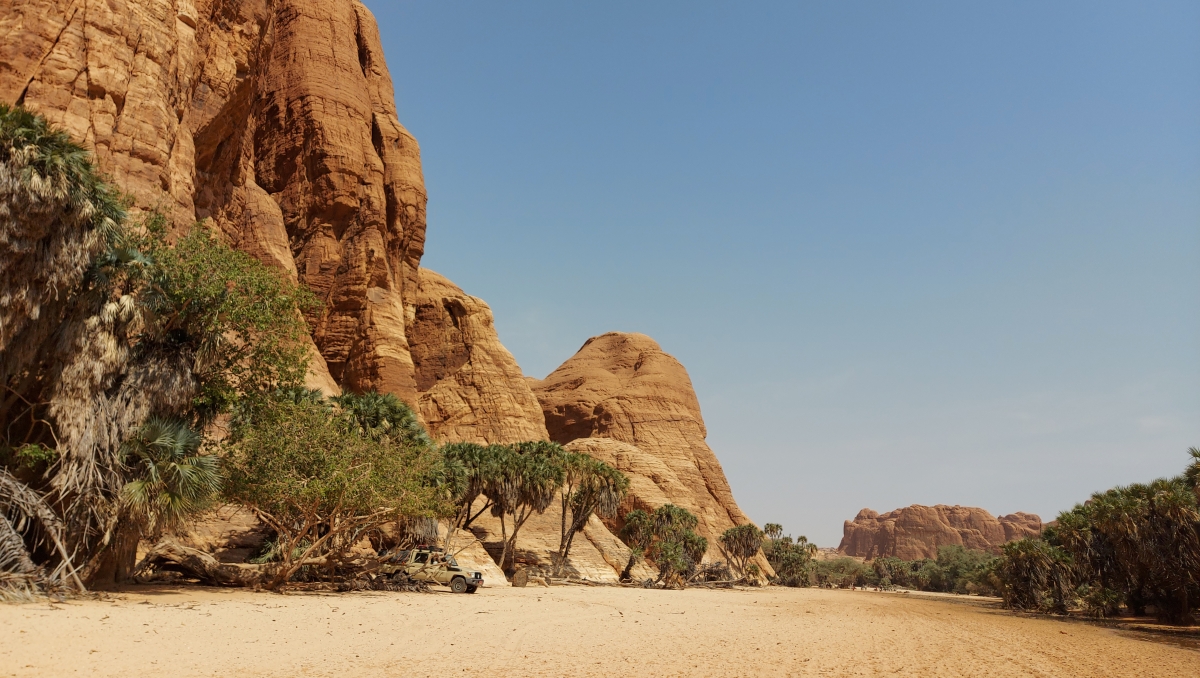 Ennedi Massif of Chad
For many years already, Kopp and her collaboration partners had been collecting samples from different primates in sub-Saharan Africa. There was thus sufficient data from large geographic regions – but not from the central Sahel. The team closed this data gap by traveling to Chad for field research, where they collected faecal samples for genetic comparison as well as bones and teeth for stable isotope analysis. The researchers then started comparing these results with the mummified baboons. "We are really excited to get the results of the comparison. We assume that the first baboons in ancient Egypt were imported via trans-Saharan trade routes from what is now Chad", Kopp explains. However, it will take a few more months until the results of the lab analyses are in and they can see whether their hypothesis is correct.
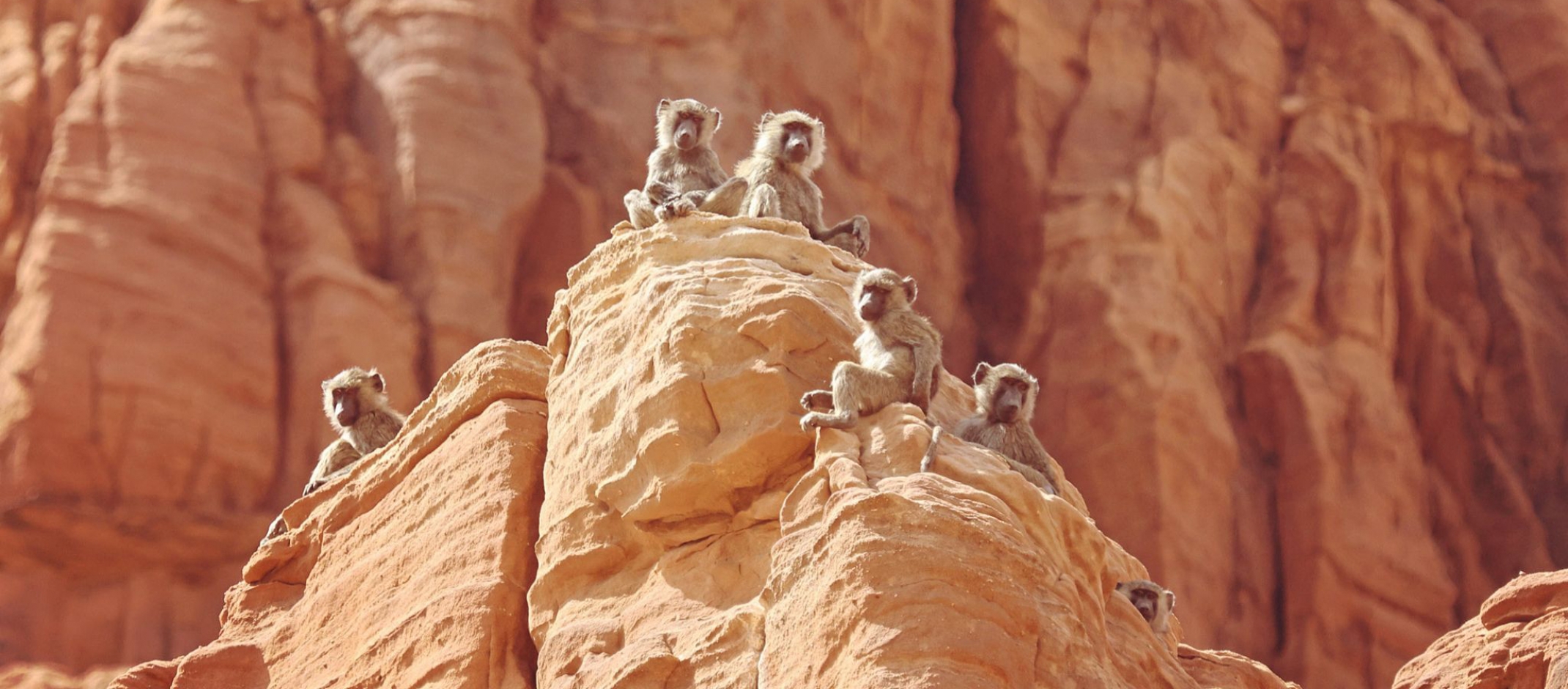
According to the biologist, another milestone of the field work was that they were the first research team ever to collect data on the population of primates in the Ennedi Massif. The region known as the "Eden of the Sahara" is classified as a UNESCO Natural and Cultural Heritage Site. It is home to several species that were isolated from their conspecifics further south during the aridification of the Sahara about 8,000 years ago. The data on this population is thus particularly suited for comparison with the mummified baboons, since this is the northernmost natural habitat of the baboons, and they were thus most likely to have come into contact with pre-Egyptian peoples. "The genetic data will also show us whether the primate population of the Ennedi Massif is a relict of a formerly widespread population that has since retreated to more southerly regions. Another hypothesis is that they may have migrated from regions further east along tributaries of the Nile that have since dried up", Kopp says.
Important findings from Chad
In addition to the findings in their specific research project, the biologist and her team were impressed by the size of the primate populations in the Ennedi Massif. "Given the region's climatic and ecological conditions, we had expected the groups living there to be at the boundaries of what is possible for them and that they either might not be in the best physical shape or would be living in smaller groups than their conspecifics in more fertile regions. Based on our observations, however, we are very confident that they are not endangered. Now we are considering how we can better study their adaptations to living in the desert", the biologist says, looking ahead to future research.
Their time in the field also revealed how much potential the region has. Chad is four times the size of Germany, but has only one fifth of the population. The country spans more latitudes and has more biomes than almost any other country in Africa – from the volcanic mountains and sandy desert in the north across the grassland and savannahs to the forests and floodplains in the south. Yet, there has been little research done on Chad's biology, ecology and biodiversity. "Our local partners were very interested in continuing to work together and significantly growing our shared knowledge. Our research stay has been a good and promising cornerstone for this", Gisela Kopp concludes. Without the international collaboration and the funding provided by the ZENiT Fellowship, this work might not have been possible, and now it continues to hold the potential for exciting future findings.
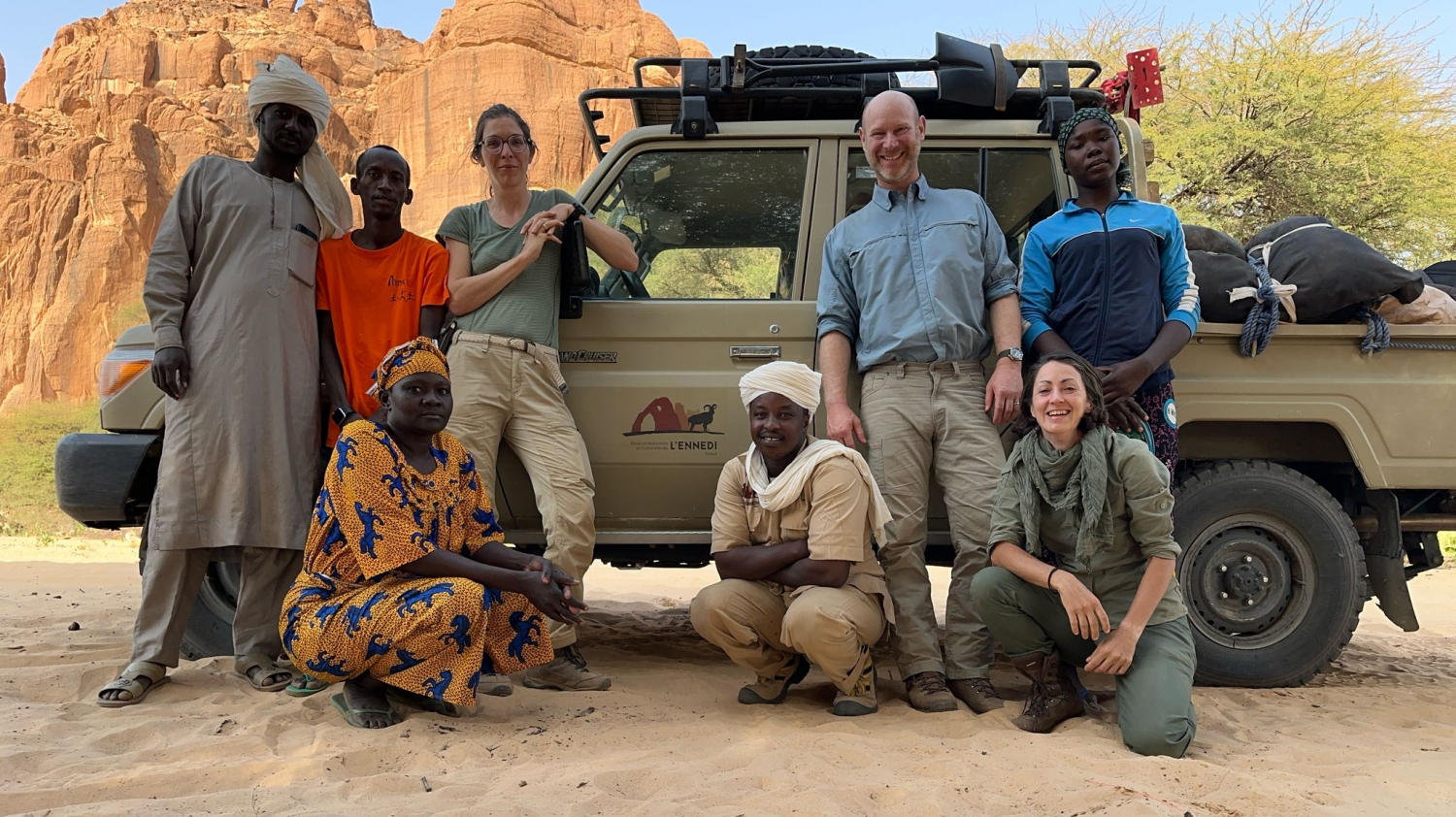
© Cat HobaiterThe team at the close of their successful field research in the Ennedi Massif.