
Can we call it fascism?
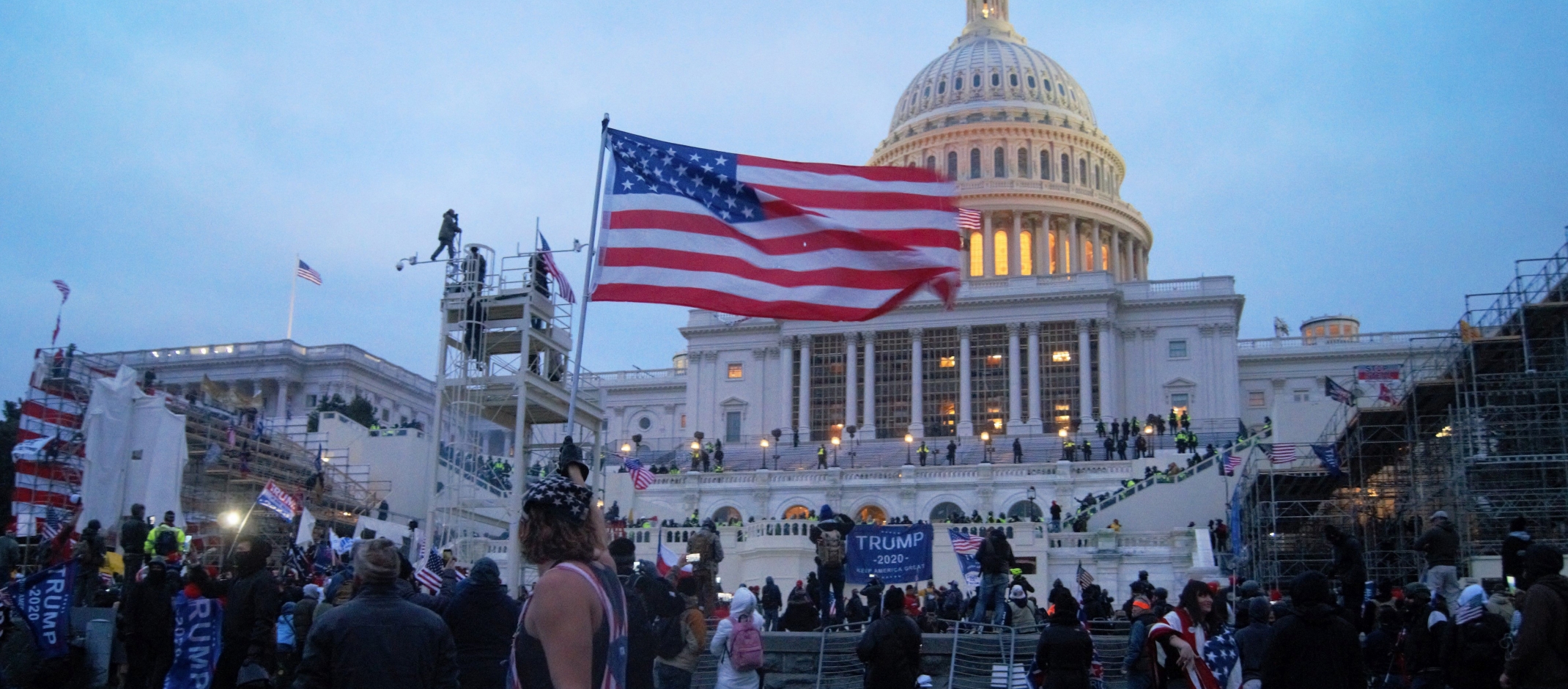
"Yes, It's Fascism" is not just the title of a well-known article by the American intellectual Jonathan Rauch in The Atlantic. It is also a potential answer to the question we currently face: Can we equate the political developments we see taking place in the United States with fascism? Sven Reichardt, professor of contemporary history at the University of Konstanz, had long hesitated to use the term in this context. The events that have taken place in the USA since Donald Trump returned to office did not appear to have taken a similar shape to 20th century fascism under Mussolini or Hitler. So, can we call it fascism?
Or, how is "fascism" defined in historical terms? "Historically speaking, fascism is when a kind of popular dictatorship develops out of a democracy. Fascist movements used democratic mass society to transform countries into repressive mobilization states characterized by racist and ultra-nationalist ideological elements", Reichardt explains. "And, at least in terms of ideology, we find some parallels in today's MAGA movement in the United States."
A multi-step process
There are also similarities in the process of how a fascist movement is established in democratic crises. Reichardt observes similar steps today: the ideological formation of the movement, the multifaceted attacks on the democratic constitutional order, the deliberative public and academia, as well as the creation of a permanent state of emergency.
"The ideological link to fascism becomes evident when Trump claims that 'migrants are poisoning the blood of our nation. But there are other ideological elements, too, such as the glorification of strong-arm politics, the obsession with doomsday fantasies or the evangelical movement's cult of leadership around Trump. The rhetoric is growing tougher and glorifying violence."
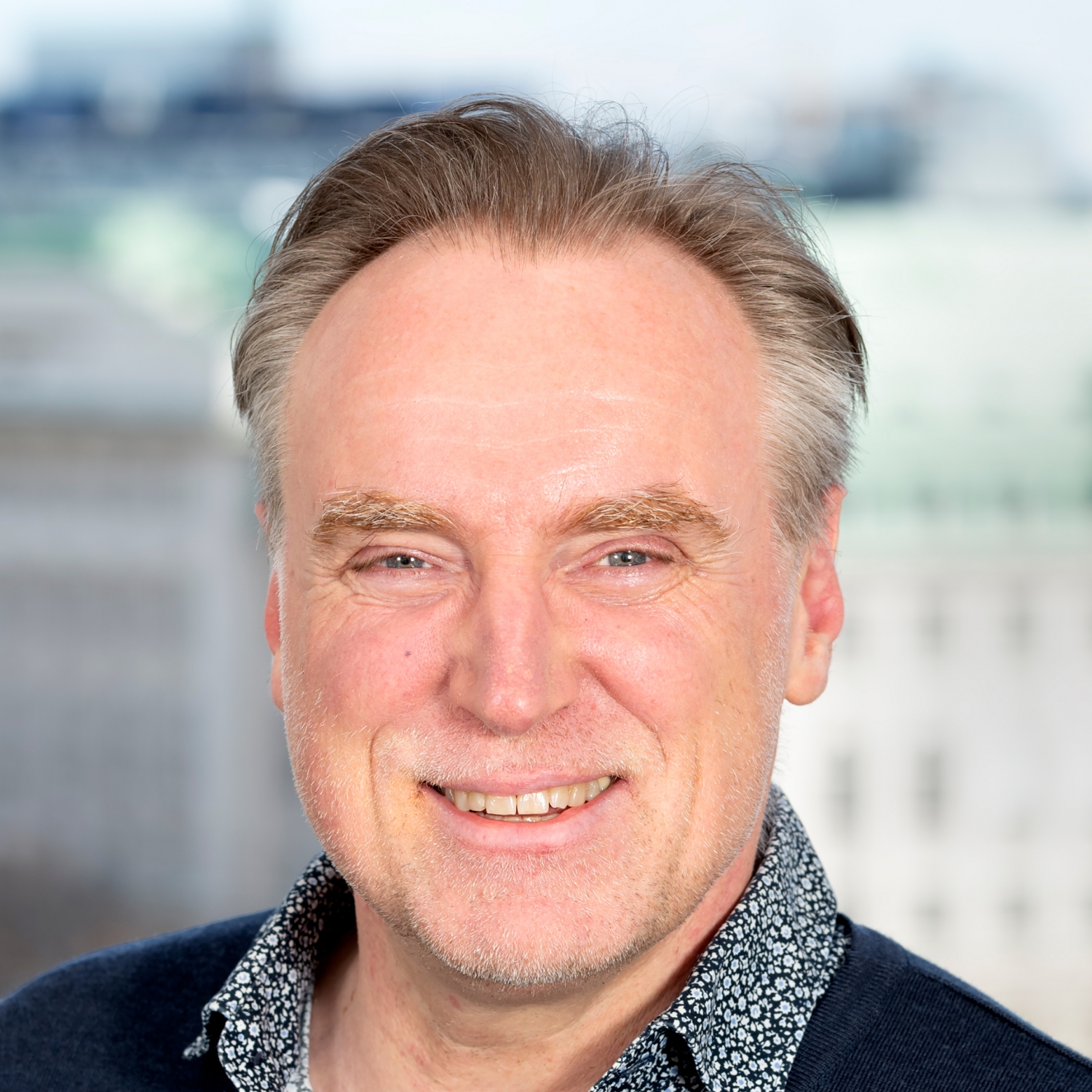
Sven Reichardt
Attacks on the media and courts put democracy under pressure with the aim of destroying or at least undermining the rules-based order. "Furthermore, there is the construction of a state of emergency with characteristics of a police state: The Immigration and Customs Enforcement agency, ICE, was converted into a special forces unit. And, since his second term began, Trump has mainly governed by executive order. These elements are clearly reminiscent of the dual state structures under historical fascism", the historian explains.
Societal developments then and now
Yet, it is not so easy to make a call on the matter. There are, indeed, some differences between Germany in the 1920s and the USA today. "First of all, unlike in the Weimar Republic, the USA is not an impoverished society. It does not have the same high number of unemployed people, the same low level of prosperity or the same strong social fragmentation", Reichardt says. "Although these situations are present to some extent today, it is at a completely different level. In American society, the concern, mainly on the part of the middle classes, is economic decline – especially in the context of modernization or economic globalization. This includes, for example, the American steel industry. In the Weimar Republic, by contrast, it was the craftspeople that had come under economic pressure due to mass production."
Is there a better term to describe the situation in the USA?
Populism: "This term does not account for radicalization – people are either populist or not. And populism is not tied to an ideology. It describes political movements that purportedly act against elites and on behalf of everyday people. To me, this term does not sufficiently describe current developments in the USA." (Reichardt)Authoritarianism: "From Xi Jinping to Putin, authoritarian rulers try to silence the public. In the case of Trump, the opposite is true – he wants to activate the populace in addition to mobilizing and radicalizing people ideologically. The term 'authoritarianism' also does not account for this ideologization or the overlapping and competing power structures within the Trump movement. In an authoritarian system, people act as if there is only one ruler who leads from the top down – when this person gives orders, everyone else willingly complies." (Reichardt)
In both situations, the new media landscape reflected the fragmented views of the public. During the Weimar Republic, the press was split into different milieus – there were social democratic, conservative, communist and national-socialist outlets that each published the "truth" as they saw it. Today, the emotionalization and dramatization of politics takes place on social media, which contributes to social division. This is why Reichardt talks about comparable processes taking place at different levels, also concerning nationalism: Where today there is the idea of American exceptionalism (the USA as a "chosen" nation), back then, it was the concept of the German Empire being an "ideal" for the rest of the world to follow.
Old elements in new clothes
In order to distinguish between the historical meaning of fascism and present developments, Sven Reichardt prefers to use the term "post-fascism" (analogue to post-colonialism), since elements of the past fascist period are re-emerging in current times. Unlike in the case of Nazi Germany, there is no war of genocide taking place today in the United States – the country has not expressed any genocidal intent comparable to the holocaust. And, although ICE is building new detention facilities, there are (currently) no concentration camps, in which people are systematically tortured and killed.
"I also do not see Trump as an ethnic warmonger aiming to systematically build up a great empire – even in spite of his comments on Greenland or Canada, despite his wars in Venezuela and Iran. At the end of the day, he is a businessman who wants to make deals. In the USA, the libertarian economic element is very strong. The tech industry does not want state involvement. The national socialists, by contrast, wanted the state to regulate everything and did not follow purely liberal economic policy."
Sven Reichardt
Another advantage of the term "post-fascism" is that it leaves the next steps open: Will the needle move towards fascism or back to democracy? For example, what would the MAGA movement (Make America Great Again) be without Trump? "MAGA is a charismatic movement that is very focused on the leading figure, and it fosters fantasies of doomsday scenarios that can only be averted by this one person. Many Americans – especially since the assassination attempt on Trump – believe that he is a saviour-leader. It could be a decisive turning point when this central figure, Trump, is some day no longer around."
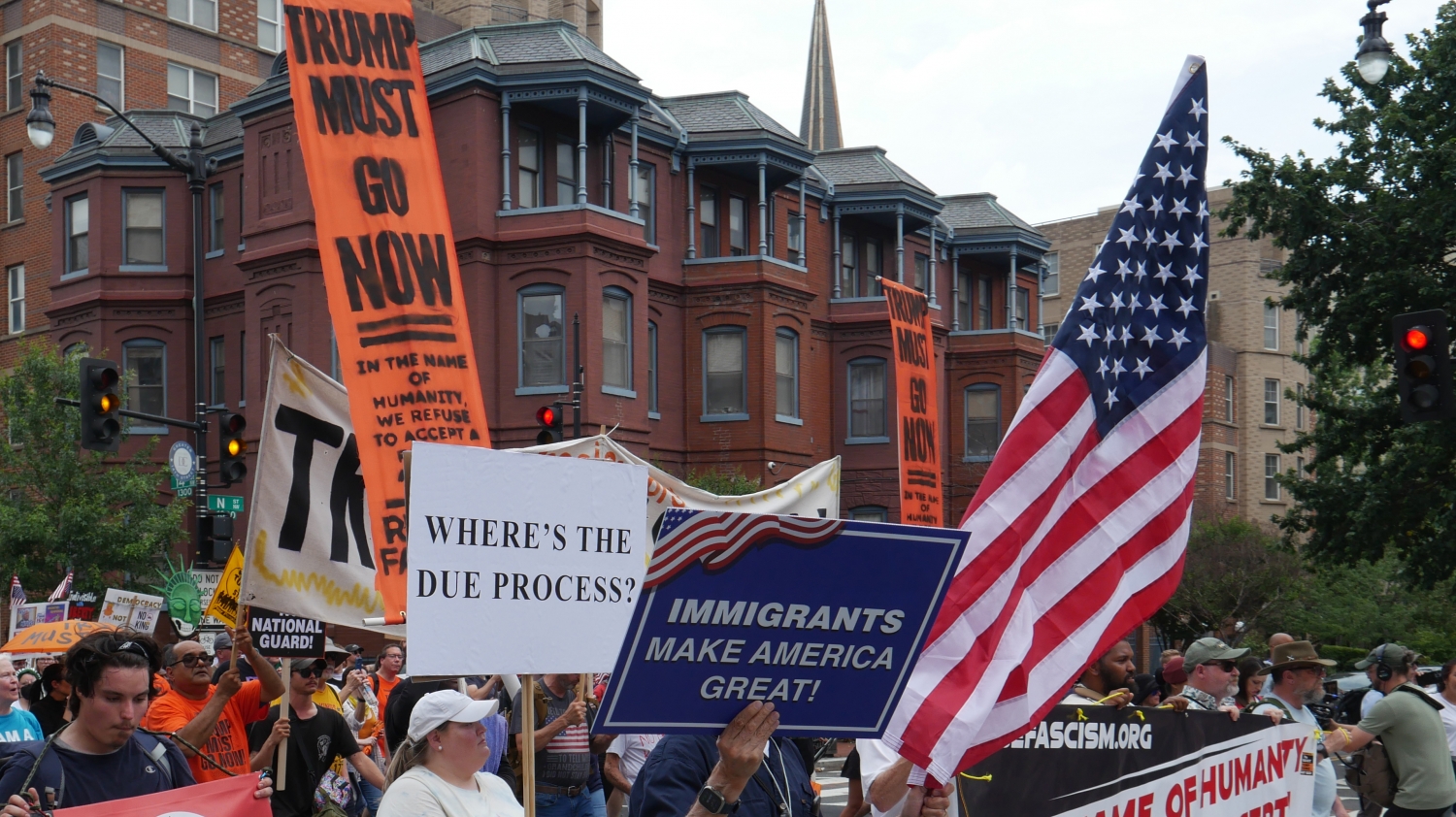
At the moment, Trump's approval ratings are polling at an all-time low, because of ICE operations and high inflation. Many of his major promises remain unfulfilled. Historian Sven Reichardt points out that, in 1934, the Hitler regime was also in crisis. At the beginning, his public support shrank, and it only stabilized once the economic situation improved. This change was the result of state intervention, which is currently being rejected under Trump. "For the Trump administration, it would be a major problem if it were unable to get the country's economic difficulties under control and the courts rejected its chaotic tariff policy. This is another good sign that the system of checks and balances still seems to be working", Reichardt says. "And, as we can see from the protests, American civil society seems to care more about preserving democracy than the citizens of the Weimar Republic, when very few wanted to defend democracy."
© Nihilego, Wikimedia Commons, Lizenz CreativeCommons Attribution-ShareAlike 4.0 International, no changes
Defending democracy
What can we learn from comparing the fascist and post-fascist systems? A look at America shows how quickly democracy can come under threat. For Germany, Reichardt says, this means it is necessary to do more than carefully observing right-wing movements in our own country. Like people in the USA, Germans need to take action against radicalization – since the ideologies behind the American MAGA movement and right-wing populist partes are related. The latter follow and have close ties to MAGA.
Conferences such as the one Sven Reichardt is organizing for the end of March at the University of Konstanz ("Das Gespenst des Faschismus"), raise awareness for the dangers of radicalization or post-fascist developments. The historian thinks it is very important to keep people informed – also by providing information about right-wing populist parties’ plans for governing, if they do come to power: "We should take their plans seriously and not just brush them off as political nonsense. There are indications that, under the AfD, migration policy would be sharpened significantly and there would be massive interference with the rule of law. This bears the risk of a corresponding reorganization of the academic, media and judicial systems." Reichardt thus recommends regulating the "propaganda machines of the far right", especially on social media: Hate speech and online emotionalization, including fake news, threaten our democracy, which functions on the basis of negotiation and compromise.
Sven Reichardt has been a professor of contemporary history at the University of Konstanz since 2011 and became director of its Centre for Cultural Inquiry (ZKF) in 2025. Recent publications on this topic: Reichardt, Sven: Fascism's Stages: Imperial Violence, Entanglement, and Processualization, in: Journal of the History of Ideas 82, number 1, 2021, pp. 85-107; Reichardt, Sven: What Is Post-Fascism?, in: Journal of the History Ideas Blog, 4 June 2025: URL: https://www.jhiblog.org/2025/06/04/what-is-post-fascism/
Photos:
Header image: https://commons.wikimedia.org/wiki/File:Say_no_to_fascism_060864.jpg. Photo: Nihilego, Wikimedia Commons, licence CreativeCommons Attribution-ShareAlike 4.0 International, no changes
Quote image: https://upload.wikimedia.org/wikipedia/commons/d/d3/2021_storming_of_the_United_States_Capitol_09.jpg. Photo: Tyler Merbler, Wikimedia Commons, licence Creative Commons Attribution 2.0 Generic, no changes
Portrait photo: Sven Reichardt (rights: Sven Reichardt

